The Camino de Santiago
The Camino guide that walks you to the Cathedral
Routes, the credencial, albergues, and everything worth knowing before you lace up your boots — built on figures from the Pilgrim's Office itself.
By Cesar Rodriguez · updated
On this page
In 2025, 530,987 people picked up their Compostela at the office on Rúa das Carretas. It's the highest figure on record, 6% up on the year before — the year-by-year and route-by-route breakdown is on our Camino statistics page — and it confirms something anyone who spends an afternoon on Praza do Obradoiro can see for themselves: the Camino is no longer a niche pursuit or a passing trend. More than half of those who walked in 2025 came from outside Spain, and for the first time women (53.45%) outnumbered men among pilgrims. July and August remain the busiest months, with a sharp peak around 25 July, the feast of the Apostle.
What the Camino de Santiago actually is
It isn't a single route but a network of historic paths that all converge on the same point: the tomb of the apostle Saint James beneath the high altar of the Cathedral. Some, like the Camino Francés, have been waymarked for centuries and come with every conceivable layer of albergue infrastructure. Others, like the Vía de la Plata, cross long stretches of rural Spain where it pays to plan more carefully where you'll sleep and eat. What they all share is the destination and, for anyone who covers the minimum distance required, the right to request the Compostela.
Choosing a route: a first look
No route is better than the others. There is one that fits the days and the legs you have:
- Camino Francés. By far the most popular choice: nearly half of 2025's pilgrims walked it, crossing the Pyrenees from Saint-Jean-Pied-de-Port. It is also the best equipped, with the densest network of albergues, waymarking, and fellow walkers to share a stage with.
- Camino Portugués. Its Central and Coastal variants account for over a third of pilgrims between them, on a flatter profile that suits first-timers; we have its stages from Tui in detail.
- Camino Inglés. From Ferrol, the short option par excellence; there is also a guide to the English Way, stage by stage.
- Camino Primitivo. The oldest Jacobean route, laid down in the 9th century under King Alfonso II. Its mountainous profile demands legs that are already trail-hardened.
- Camino del Norte. The other one that asks for trained legs, for the same reason: mountains.
If you want to compare every route by distance, stages and difficulty, we have a complete guide to all the routes. Two common situations get guides of their own: if you only have two weeks, and if you want to reach Santiago while dodging the wave of the last 100 km, for which the Camino de Invierno is the serious answer.
The credencial and the Compostela, in short
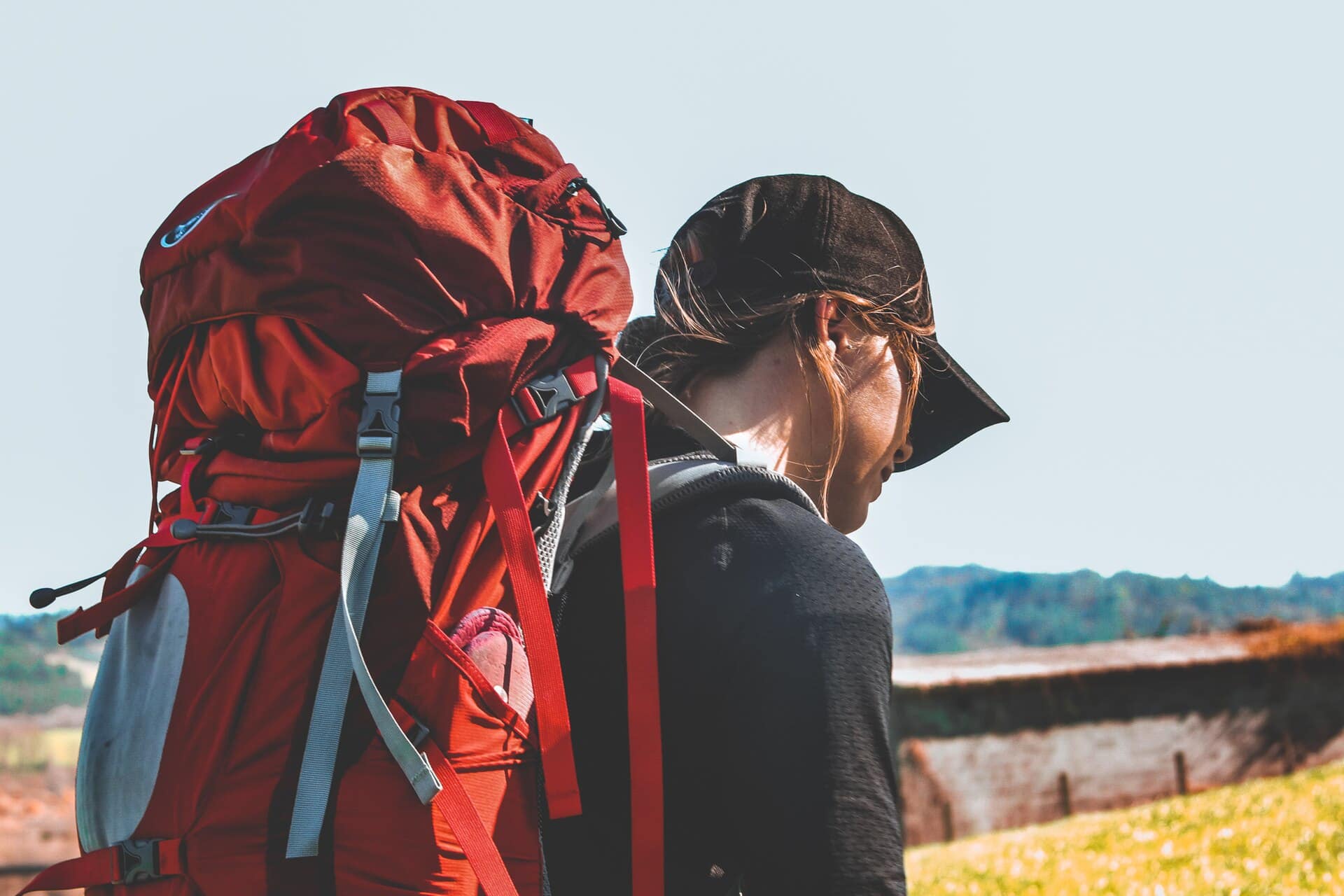
To be issued the Compostela you need two things:
- To have walked at least 100 km (200 km if cycling, and e-bikes don't count).
- To carry the pilgrim's credencial stamped at least twice a day over that final stretch.
The credencial itself costs between 1 and 10 € depending on where you get it — Camino offices, parish churches, albergues — or you can go digital with the official app. With every stamp in order, the Pilgrim's Reception Office, at Rúa das Carretas 33, is open every day from 9:00 to 19:00 to issue it. We cover this in more detail, including the difference between the religious Compostela and the Distance Certificate, on the dedicated Compostela page.
When to walk
Spring, from April to June, and above all autumn, from September to October, are the seasons most experienced pilgrims recommend: good weather, without the crowds or heat of July and August, and private albergues with more room to find a bed. Summer has its own charm — long evenings, a village-festival atmosphere in every town — but it also brings full albergues and the year's highest prices. Winter, by contrast, is the Camino for those seeking solitude: many private albergues close, and stretches like the Pyrenees or O Cebreiro turn serious with cold and snow. And whatever the month, the busiest stretch is always the same one: the last 100 km from Sarria, which get a chapter of their own. If that's your plan, the stage planner splits those days between Sarria and Santiago using the real route and the registered albergues at each stop. There is a second calendar that has nothing to do with the weather and everything to do with services — the Napoleon route, the mountain refuges, luggage transfer: it is in when the Camino opens and closes. And whatever you choose, the part of the trip that breaks most plans is reaching the starting point, which is almost never a city with a station.
Where to sleep on the way
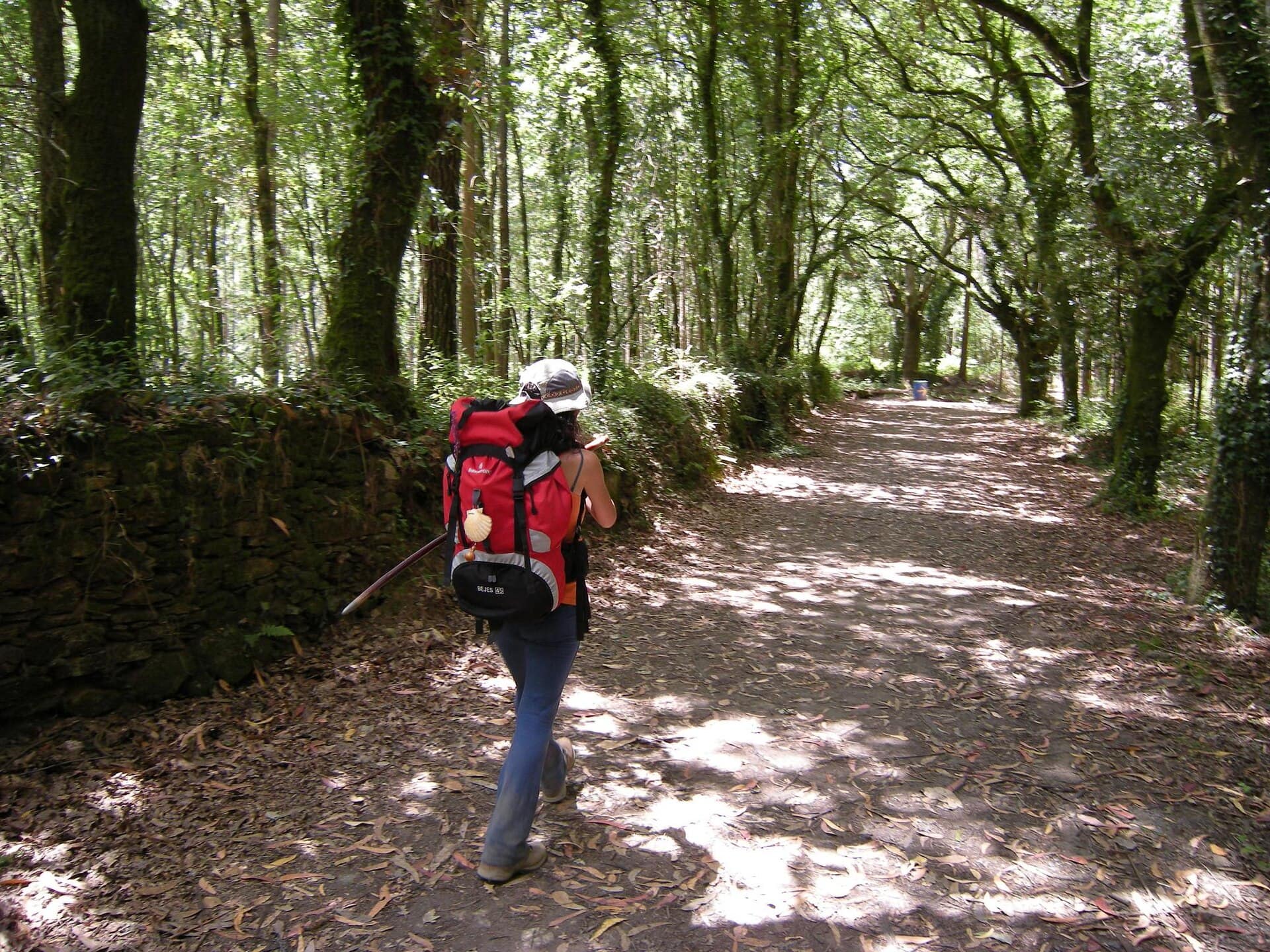
Galicia's public albergue network, run by the Xunta, has 76 centres and over 3,000 beds, priced at 10 € a night. They work on a first-come basis with no booking, priority given to those on foot, and only one night's stay allowed at each, which keeps everyone moving forward. Private albergues, more flexible and often offering double or triple rooms alongside the shared dormitory, run 12-25 € and climb to 30-35 € in high season, when it's worth booking ahead. And if you're wondering where pilgrims genuinely run out of beds — town by town, from first-hand accounts — we've collected it in a guide of its own.
The backpack you don't have to carry
If the weight of your pack worries you more than blisters do, Correos offers a Paq Mochila luggage-transfer service from 5-7 € per stage: they pick it up from your accommodation in the morning and deliver it by 14:30 at the next, with discounts if you book several stages at once. It covers the main routes — Francés, Portugués, Inglés, Primitivo, Norte and the Fisterra-Muxía extension — with fuller coverage between March and October. The conditions that decide whether it suits you — pickup times, weight limits and what happens if you don't yet know where you'll sleep — plus the companies competing with Correos, are in the luggage transfer guide.
Apps pilgrims actually use on the trail
Buen Camino, with over a million downloads, bundles 45 route guides with elevation profiles and a stage planner. Gronze is the classic reference among pilgrims for the detail of its stage and albergue write-ups. And Wikiloc, with more than seven million GPX tracks available, works both for following the official route and for exploring variants. All three hold up reasonably well without signal — a relief on stretches of the Vía de la Plata where your phone goes dark for hours. It is worth knowing in advance which numbers to call if something goes wrong.
The Camino on the doorstep of Xacobeo 2027
2026 is not a Holy Year — that only happens when 25 July falls on a Sunday — but the next one, Xacobeo 2027, is already being prepared: the Cathedral's Holy Door will formally open on 31 December 2026 and stay open through the following year. If your plan is to walk in a Holy Year, with the plenary indulgence that comes with crossing that door, 2027 is the date to circle. We cover exactly what happens on arrival in Santiago, pilgrim's mass included, in this guide to arriving.
Frequently asked questions
How many kilometres do I need to walk to get the Compostela?
At least 100 continuous km on foot or on horseback on a single recognised route, or 200 km by bicycle (e-bikes don't count), finishing the last stage at the Cathedral of Santiago with at least two stamps a day in your credencial over the qualifying kilometres.
Which is the most popular route?
The Camino Francés, by a wide margin: in 2025, 45.6% of pilgrims who reached Santiago walked it. Be careful with the postcard image of the Pyrenees, though, because the official dashboard says otherwise: only 12.5% of them set out from Saint-Jean-Pied-de-Port, and 66.9% started in Sarria, 114.2 km out.
When is the best time to walk the Camino?
Spring (April-June) and especially autumn (September-October) offer good weather with far fewer people than summer. July and August are the busiest and hottest months; winter is harder but also much quieter.
How much does it cost to sleep in Camino albergues?
Public albergues run by the Xunta cost 10 € a night, with no booking and one night's stay allowed. Private ones range from 12 to 25 €, rising to 30-35 € in high season.
Can I send my backpack ahead from stage to stage?
Yes, through Correos' Paq Mochila service, from 5-7 € per stretch, with pickup at your accommodation in the morning and delivery by 14:30 at the next.
When is the next Holy Year (Xacobeo)?
In 2027. The Cathedral's Holy Door will open on 31 December 2026 and remain open throughout the Holy Year, closing again on 31 December 2027.
Keep reading
Choose your route
All Camino routes, compared
Distance, stages, difficulty and the character of each route: Francés, Portugués, Inglés, Primitivo, Norte and Vía de la Plata.
Paperwork
The Compostela and the credencial, step by step
Requirements, stamps, where to get the credencial and how the Pilgrim's Reception Office works.
Journey's end
What to do on arrival in Santiago
Pilgrim's mass at the high altar, the embrace of the Apostle, and why the botafumeiro is out of service right now.