Around Santiago
Day trips from Santiago de Compostela
The end of the world, a village of stone granaries by the sea, the birthplace of Rosalía de Castro, or a working Roman lighthouse. All of it fits into a day if you leave early.
By Cesar Rodriguez · updated
On this page
Santiago sits near the middle of Galicia almost by design: the sea is under an hour away in any direction, and the Camino itself has left behind roads and bus routes that connect the city well with its surroundings. You don't need a rental car for nearly any of these trips, though having one makes it much easier to combine two stops in a single day.
Fisterra and the Costa da Morte
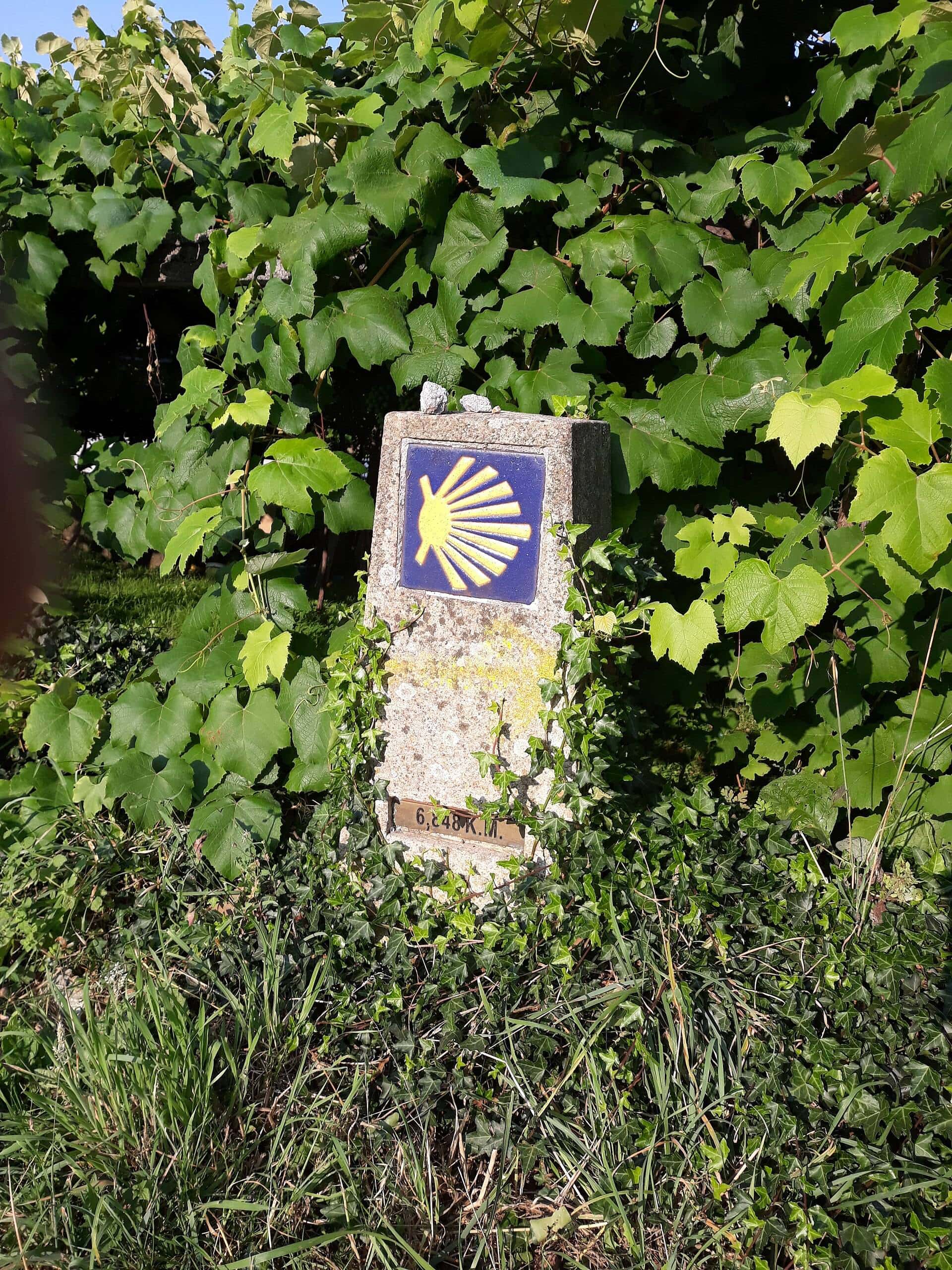
The real End of the World, not the metaphor: the Fisterra lighthouse stands on a headland where the Atlantic breaks with a force the sheltered rías never see. Right by the lighthouse is the legendary Km 0 marker, where many pilgrims close the Camino to Fisterra even though their Compostela was already stamped in Santiago. A short way along, Muxía has its own shrine by the sea — A Barca, with the Abalar and Cadro stones, tied to the legend of the Virgin appearing in a stone boat — and on the way, in Ézaro, the Xallas river drops straight into the sea as a waterfall: the only place in continental Europe where that happens.
By bus, Monbus covers the route from the Intermodal Station with morning departures (roughly between 9:00 and 11:00); the fastest direct service takes about 2 hours, and a one-way ticket costs €7.35 to Fisterra and €6.85 to Muxía at standard fare, less with the Tarjeta Metropolitana Galicia (TMG) transport card. Mind which service you take: most loop through Noia, Muros and Cee and take 2h10 to 2h55; the only direct ones, just over an hour, are the 08:00 to Fisterra (Monday to Friday) and the 14:30 to Muxía. Fisterra and Muxía are linked by a further 33-minute leg. Frequency isn't high, so if you want to fit both stops into one day, check the timetable on monbus.es before you go. Organised tours (Civitatis-style) solve that problem: the short Fisterra-and-Muxía version runs 6.5-10 hours from about €41; the extended version, which adds Ponte Maceira, Cabo Vilán lighthouse and Carnota, runs 9-10 hours from about €55.
Rías Baixas: granaries, albariño and mussels
Combarro is probably the most photographed village in Galicia: stone hórreos (raised granaries) lined up along the shore, stone crosses on every corner, and an old fishing quarter you can walk end to end in an hour or two, free of charge. Cambados, a little further south, is the unofficial capital of albariño wine: the Praza de Fefiñáns, with its 16th-century manor-winery, is the obvious spot for a tasting. Following the coast, O Grove and A Toxa — joined by a bridge — combine a seafood market, the Gran Hotel La Toja and the small Capela das Conchas (Chapel of Shells), and Arousa Island, also bridge-connected, adds beaches and some of the region's best shellfish production.
From O Grove, Vilanova de Arousa or Vilagarcía, boat trips of an hour to ninety minutes sail among the mussel rafts (bateas) and serve steamed mussels on board: with Cruceros Pelegrín they cost €18 for adults and €9 for children (ages 3-12); other operators such as Turimares or Cruceros Rías Baixas charge around €20. By train, Renfe reaches as far as Vilagarcía de Arousa or Pontevedra from €4, but from there you'll need a bus or taxi to reach the coastal villages themselves — there's no direct train. Monbus also runs a daily line from Santiago through Vilagarcía, Cambados, Sanxenxo and A Toxa. If you'd rather not plan it yourself, a full-day tour combining Padrón, Combarro, Cambados, A Toxa and Arousa Island, boat trip included, runs from about €44.
Padrón: Rosalía de Castro and the legend of the Apostle
Padrón is the fastest trip on this list, and one of the most rewarding for understanding Santiago's own story. Under the altar of the Church of Santiago de Padrón sits the pedrón, a Roman altar stone that tradition identifies as the mooring stone of the boat that carried the Apostle's body from Jaffa — the legend of the traslatio. From here, the body is said to have been carried inland to Monte Libredón, where the Cathedral now stands. In a way, it's the starting point of the whole story that makes Santiago exist.
The Rosalía de Castro House-Museum, in A Matanza, is set in the poet's birthplace and dedicated to the most important Galician-language poet of the 19th century. It opens 10:00-14:00 and 16:00-20:00 in July-September, with shorter hours (10:00-13:30 and 16:00-19:00) the rest of the year, Sundays and holidays 10:00-13:30 only, and it's closed on Mondays. Admission is €2 (€1.50 for groups over 20, €1 for schoolchildren over 6, free under 6). Just 2 km away, in Herbón, is the Franciscan convent where the famous Padrón peppers were first grown — now a Protected Designation of Origin in their own right.
The train is by far the best way to get there: up to 13 daily services (06:12 to 22:16) and just 15 minutes on the fastest one. There's also a bus, though it's worth checking the exact schedule and fare before you go.
A Coruña: the world's oldest working lighthouse
A Coruña makes for an easy day trip: the seafront promenade, one of the longest in Europe, runs the length of the city's Atlantic side; the Plaza de María Pita, with its Art Nouveau city hall, is the historic centre; and the urban beaches of Riazor and Orzán sit right against the old town — unusual for a provincial capital. The main draw, though, is the Tower of Hercules, a Roman lighthouse and UNESCO World Heritage Site, and the oldest lighthouse in the world still in operation. It opens 10:00-17:00 between 16 September and 15 June, and 10:00-21:00 in summer; general admission is €3 (€1.50 reduced, free on Mondays with a ticket), and access runs in 30-minute slots capped at 20 people, so it's worth booking ahead.
Renfe covers the route with around 28 daily trains and just 30-40 minutes of travel, from €6-7 (€12-14 for a same-day return). Monbus also runs there, with about 16 daily services, though it takes longer — around 1h20 — and costs a little more, from €7-9.
Cíes Islands: the trip that means leaving early
The Cíes are probably the most photogenic archipelago on Spain's Atlantic coast, but from Santiago it's a tight day trip, not a relaxed one: figure roughly an hour to Vigo plus another 45 minutes to an hour by boat from there. It's doable in a day if you leave first thing, but you'll need to plan the return carefully, since the last boat off the islands usually leaves mid-afternoon.
Pazo de Oca and shorter escapes
If you'd rather keep things brief and skip public transport altogether, the Pazo de Oca, in A Estrada, is 30-40 minutes away by car. It's known as "Galicia's Versailles" for its Baroque gardens: two large ponds — the Pond of Virtues and the Pond of Vanities — separated by a boat-shaped island covered in hydrangeas, plus camellias, azaleas and an 18th-century chapel. It's owned by the Fundación Casa Ducal de Medinaceli; check current hours and admission at fundacionmedinaceli.org before visiting. For a more ambitious full day, organised tours also run to the Ribeira Sacra — river canyons, monasteries, Denominación de Origen wine — and to A Coruña and Betanzos together.
| Destination | How to get there | Travel time | Indicative price |
|---|---|---|---|
| Fisterra / Muxía | Monbus or organised tour | ~2h (direct bus) | €7.35 bus to Fisterra · €6.85 to Muxía · €41-55 tour |
| Rías Baixas (Combarro, Cambados, O Grove) | Train + bus, direct Monbus, or tour | 50min-1h20 by car | From €4 train · ~€44 tour |
| Padrón | Renfe train | 15 min | House-Museum: €2 |
| A Coruña | Renfe train (Avant) | 30-40 min | From €6-7 · Tower of Hercules €3 |
| Cíes Islands | Car/train to Vigo + boat | ~1h to Vigo + 45min-1h boat | Boat ≈ €20-23 (to confirm) |
| Pazo de Oca | Car | 30-40 min | Check fundacionmedinaceli.org |
Frequently asked questions
If I only have one day, which is the best trip from Santiago?
It depends what you're after. For scenery and symbolism, Fisterra. For beaches, seafood and pretty villages, the Rías Baixas. For a short trip tied to the Camino's own history, Padrón — and it only takes about 15 minutes by train.
Can you get to Fisterra without a car?
Yes, with the Monbus service from the Intermodal Station, though frequency is limited, so check the timetable ahead of time. If you want to combine Fisterra and Muxía without depending on bus schedules, an organised tour solves that.
Is it worth visiting the Cíes Islands from Santiago?
It's doable in a day, but the margin is tight: you need to add the trip to Vigo plus the boat crossing, and during high season (15 May-15 September and Holy Week) you need prior authorisation from the Xunta. For a more relaxed visit, it's better to spend a night in Vigo or Cangas.
Where's the seafood better, in Santiago or on the trip?
The Mercado de Abastos in Santiago has very good produce, but the Rías Baixas — O Grove, Cambados, Arousa Island — are the actual production area, and a mussel-tasting boat trip is about as direct as it gets.
Do I need to book anything in advance?
Yes for the Tower of Hercules in A Coruña, since access runs in limited time slots. Yes for the Cíes Islands in high season, where you need Xunta authorisation. For the other trips on this page, checking the bus or train timetable the day before is usually enough.
Keep reading
Getting there
Getting to Santiago
Train, bus, car and plane: every connection to the city, with real timetables and prices.
Visit
Itineraries: 1, 2 and 3 days
How to split your time in the city if you also want to set aside a day for a trip out.
Eat
Where to eat in Santiago
Octopus, shellfish and Michelin stars right in the city, in case the coastal seafood isn't enough.