The Santiago de Compostela guide
Where every road ends.
Wet stone, incense and bells. Santiago has spent twelve centuries welcoming people who arrive on foot and people who land at Lavacolla. This guide tells the city the way someone who lives here would: with opening times, prices, and few detours.
Start here
The whole city, organised into eight guides
Sightseeing
What to see in Santiago
The Cathedral, the four squares, San Martiño Pinario, the Mercado de Abastos and the viewpoints. A route with judgement, not an endless list.
Pilgrims
The Camino de Santiago
Every route compared, the credencial, the Compostela, and what to do when you reach the Obradoiro with sore feet.
Sleep
Where to stay
From the 1499 Parador — the oldest hotel in the world — to €10 hostels. Neighbourhoods, real prices, and when to book.
Eat
Where to eat
Pulpo á feira, Tarta de Santiago, the Mercado de Abastos and two Michelin stars. With real prices, from the set menu to the tasting menu.
Arrive
Getting there
High-speed rail from Madrid in a little over three hours, the new Intermodal station, buses, and the Lavacolla airport 12 km out.
Move
Getting around the city
Almost everything is done on foot. For the rest: a €1 city bus, taxis, car parks, and the rules of a car-free old town.
Beyond the city
Day trips from Santiago
Fisterra and the Costa da Morte, the Rías Baixas, Padrón, A Coruña. Where to go if you have an extra day.
Calendar
Festivals & events
The Fuegos del Apóstol, the Ascensión, O Son do Camiño, Cineuropa and Compostela's Christmas, month by month.
530,987
pilgrims arrived in 2025, an all-time record
1985
UNESCO World Heritage Site
1495
the USC was founded — five centuries of university life
2027
the next Holy Year: the Holy Door opens 31 Dec 2026
Tool
Split the final stretch of the Camino into stages
The planner takes the final stretch of the Camino and splits it into whatever number of stages you choose, using the real route and the registered albergues at each stop. It knows four starting points: Sarria on the Francés (114.2 km, the most walked stretch of the whole Camino), Ferrol on the Inglés, Tui on the Português and Lugo on the Primitivo.
The city in pictures
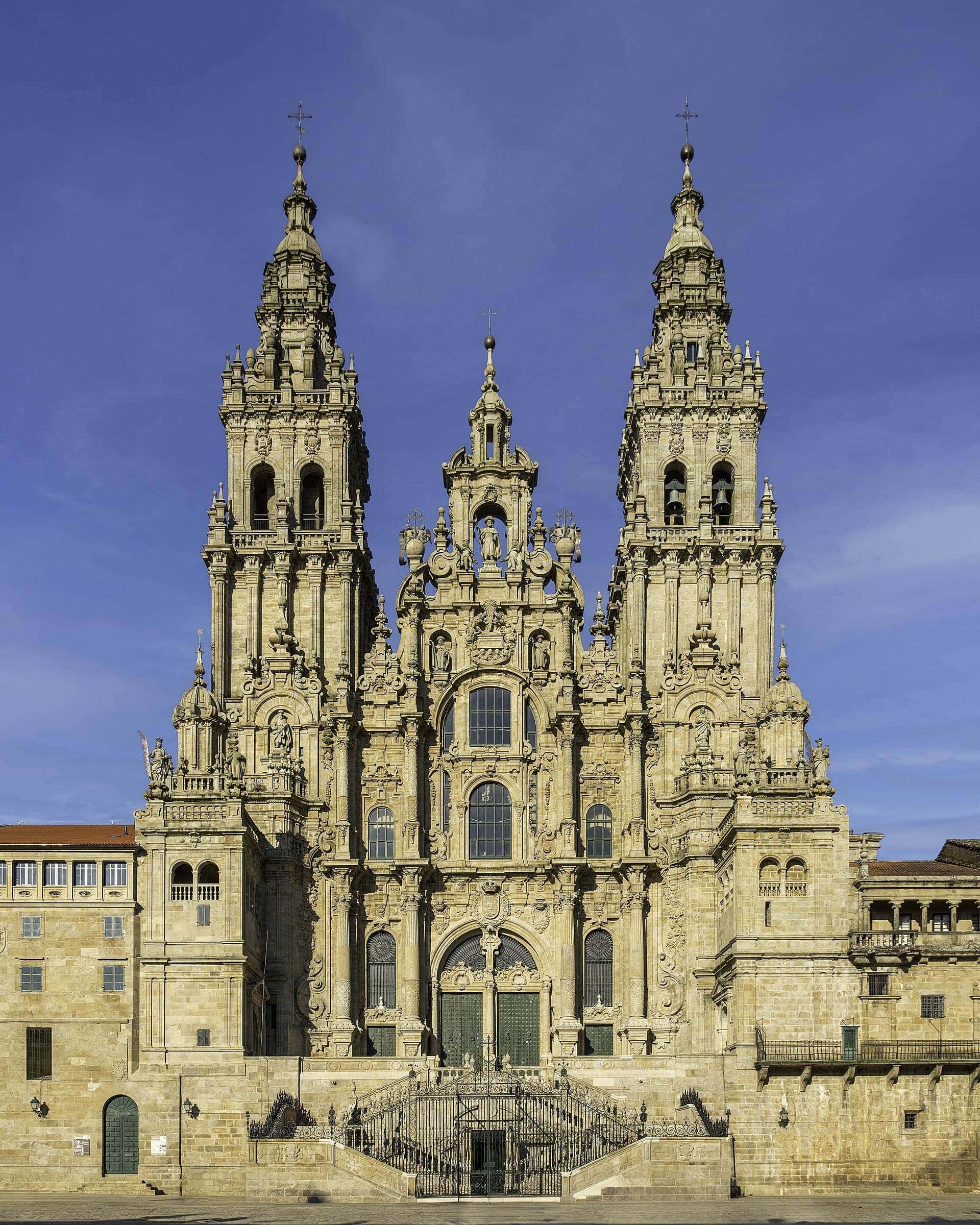
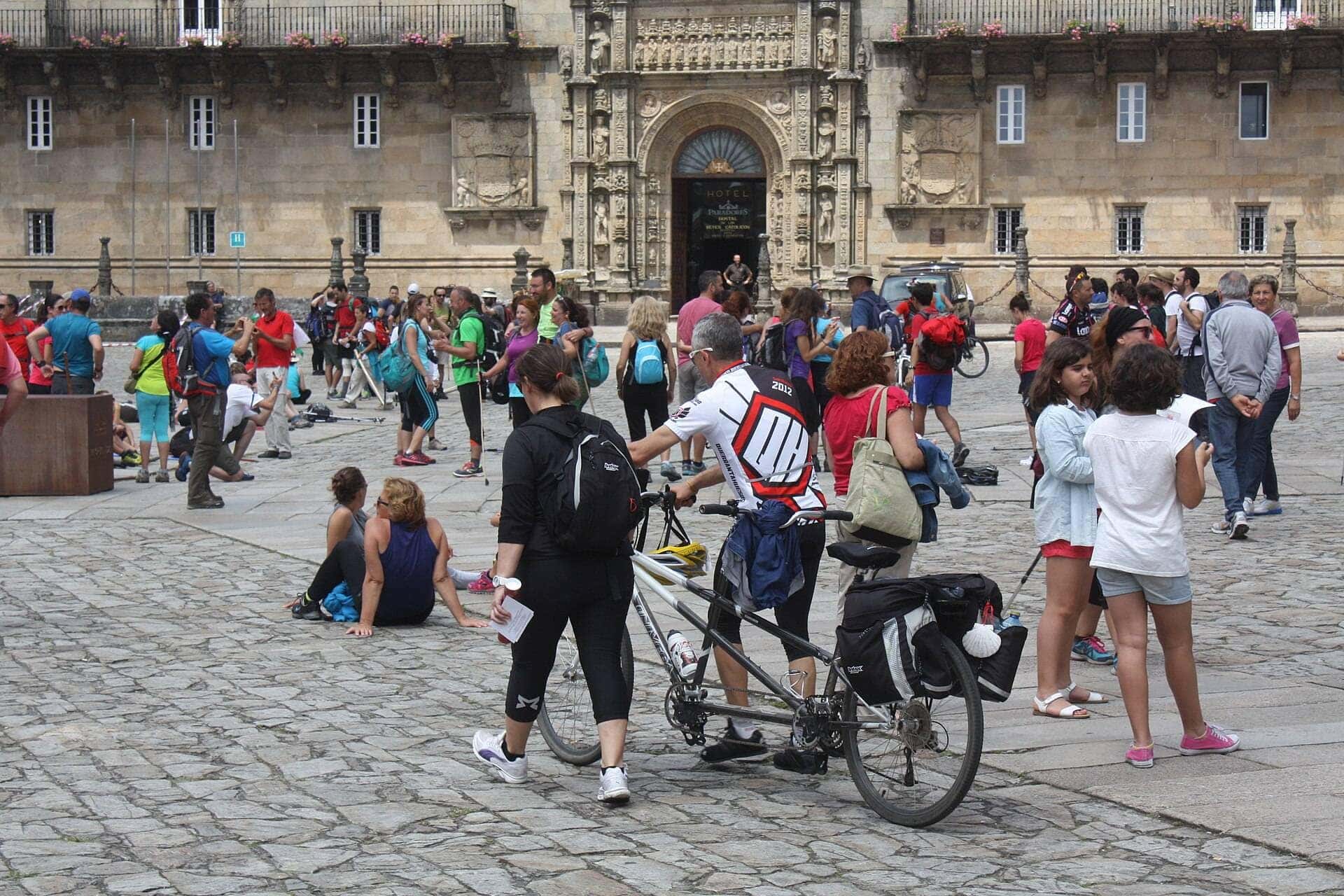

© Fernando · CC BY-SA 4.0© P.Lameiro · CC BY-SA 3.0© Luis Miguel Bugallo Sánchez (Lmbuga) · CC BY-SA 4.0
The city
A hundred thousand residents, half a million arrivals
Santiago is three cities in one. The holy city, with the Cathedral and the squares UNESCO protected in 1985. The university city, with over 25,000 students filling the Ensanche and the San Pedro neighbourhood with life since 1495. And the administrative capital of Galicia, which works in San Caetano and eats its lunch set menu in the new part of town. All three fit inside a twenty-minute walk.
It rains here about 140 days a year, and that's fine: the granite shines brighter wet, the arcades on Rúa do Vilar exist for exactly that reason, and few things beat a bowl of caldo gallego while the orballo falls outside. If your dates turn out wet, there's a whole plan for a rainy day. When the sun comes out, the Alameda fills up, and from the Ferradura viewpoint the Cathedral looks like a stage set. It isn't one.
If you're arriving as a pilgrim, there's a guide for the day you arrive. If you're visiting, start with what to see and the itineraries. And if you're weighing up staying for good — it happens to more people than you'd think — read about what living here is like (Spanish page — an English version is on its way).
And also
What everyone asks
Before you come
How many days do I need to see Santiago de Compostela?
The essentials — the Cathedral, the squares and the old town — take one full day. With two days you can take in the museums and the market at an easy pace, and with three you can add the Cidade da Cultura or the Monte do Gozo and Monte Pedroso viewpoints. We have detailed 1, 2 and 3-day itineraries.
What's the best time to visit Santiago?
May to September brings more sun and everything open, with July as the driest month. April and October offer a good balance between weather and quiet. Winter is rainy but accommodation prices drop a lot and the city is enjoyed without the crowds.
Is it free to visit Santiago Cathedral?
Yes. Access to the basilica is free (enter via Praterías, general hours 7:00 am to 9:00 pm). You pay for the Museum, the Pórtico de la Gloria with audio guide, and the rooftop tour — between €9 and €23 depending on the combination. The 2026 works are exterior (the clock tower and several chapel roofs) and don't affect the masses, which are still held at the high altar.
How do I get from the airport to central Santiago?
City bus 6A costs €1 paid to the driver and takes 25 to 50 minutes to Praza de Galicia, running every 20-30 minutes on weekdays. A taxi is €20-25 and about 15-20 minutes. The airport is 12 km out, in Lavacolla.
How many kilometres do I need to walk to get the Compostela?
A minimum of 100 km on foot or on horseback (the classic routes: from Sarria on the Camino Francés, from Tui on the Camino Portugués, or from Ferrol on the Camino Inglés) or 200 km by bike. You need your credencial stamped at least twice a day on that final stretch.
What is Xacobeo 2027?
The next Holy Year (Año Santo Compostelano), celebrated whenever 25 July falls on a Sunday. The Cathedral's Holy Door opens on 31 December 2026 and stays open throughout 2027. It's the biggest event on the city's calendar — book accommodation well ahead if you're planning to come.