Xacobeo 2027
Xacobeo 2027: the complete Holy Year guide
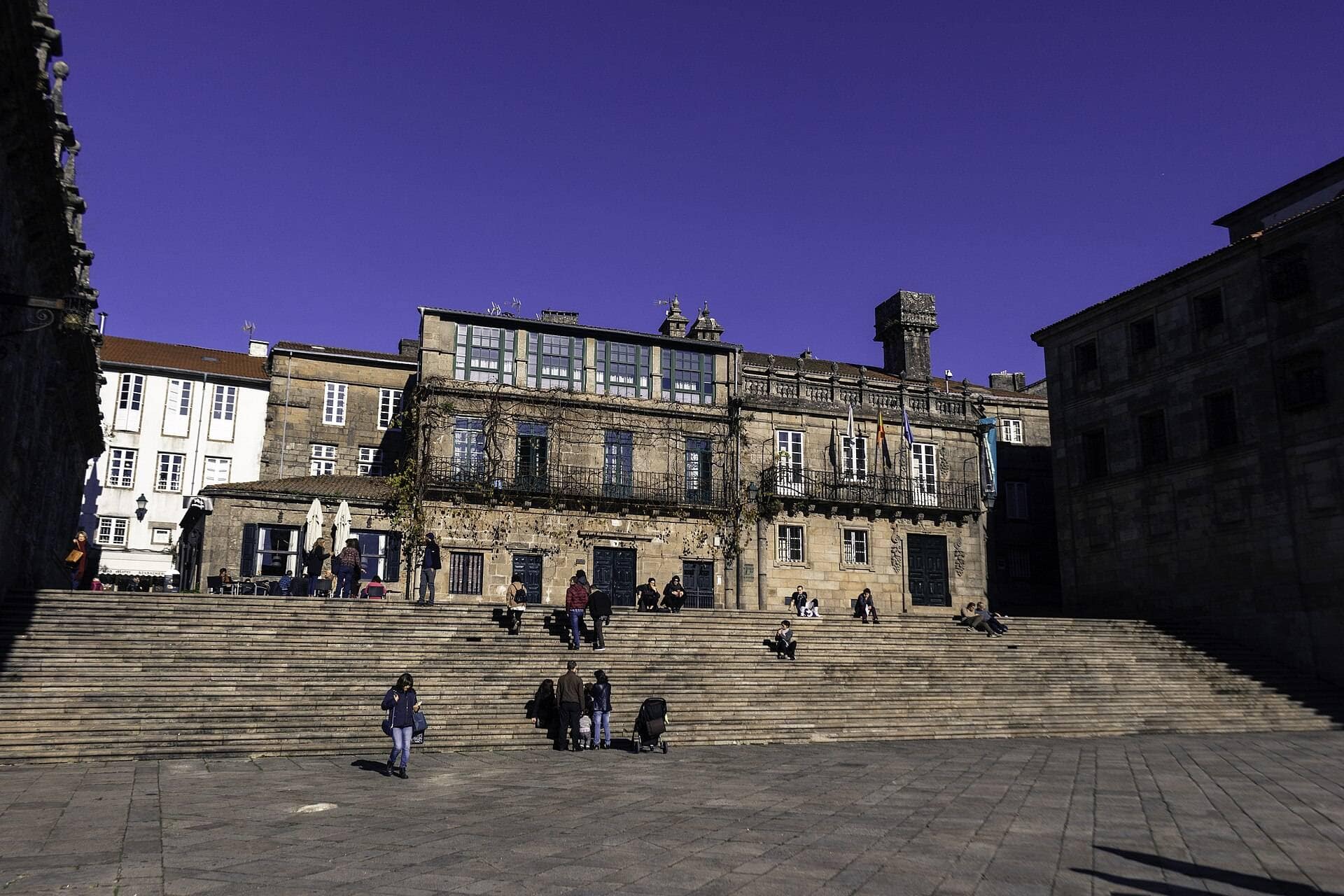
On the evening of 31 December 2026, an archbishop will strike a stone wall three times in Praza da Quintana. That's how the first 'normal' Holy Year since the pandemic begins.
By Cesar Rodriguez · updated
Updated 31 July 2026.
Xacobeo is the popular name for the Compostela Holy Year: the year the Catholic Church grants a plenary indulgence to anyone who visits the tomb of the Apostle James under certain conditions. It only happens when 25 July — the feast of Saint James — falls on a Sunday, which occurs only a handful of times a century. The next one is 2027, and it brings the opening of the Cathedral's Holy Door, a city scaling up to receive more visitors and, in all likelihood, the highest number of pilgrims in recent history. This guide covers what happens when, what it means whether you're visiting or walking the Camino, and what Galicia is doing to prepare.
The dates to know
Xacobeo 2027 doesn't start on 1 January: the Holy Door opens a few hours earlier, on the last evening of 2026, and doesn't close again until a year later.
| Date | What happens |
|---|---|
| 31 December 2026, around 4:30 pm * | Solemn opening of the Holy Door, in Praza da Quintana. |
| 1 January – 31 December 2027 | Holy Year: the Holy Door stays open all 365 days. |
| 25 July 2027 (a Sunday) | Feast of Saint James — the reason 2027 is a Holy Year. |
| 31 December 2027 | The Holy Door is closed and sealed again until the next Xacobeo. |
* Approximate time, reported by the press; the Archdiocese had not published an official schedule as of July 2026.
Keep reading
The Holy Year
What a Holy Year is, and the indulgence
The 6-5-6-11 cycle, the 2021-22 anomaly, and what the plenary indulgence actually requires.
The Holy Door
History and the opening ceremony
The 27 figures on the portico, the bronze door by Suso León, and the 31 December ritual.
Plan your trip
When to visit in 2027 (and when to avoid it)
Month by month: expected pressure, the 25 July weekend, and when to book.
On this page
Why 2027 will be different
The starting point is already a record. In 2025, 530,987 pilgrims received a Compostela in Santiago, the highest figure on record — the full breakdown is on our Camino statistics page. Far from slowing down, 2026, an ordinary year with the Holy Door still closed, is growing even faster: 395,963 Compostelas were issued between January and August, up 6% on the same period in 2025, with August alone accounting for 84,861 — the second busiest month in the whole series, behind only the Holy Year August of 2022. The city is on pace for another record before the Holy Year even starts.
Past Holy Years suggest the multiplier effect is real: 272,135 pilgrims arrived in 2010, a Holy Year; in the extraordinary 2021-22 cycle — extended because of the pandemic — the figure went from 178,912 in the atypical 2021 to 438,308 in its 2022 extension, almost double. Starting from an already record-breaking base, 2027 has every ingredient to beat any previous figure, though — worth stressing — neither the Xunta nor the Archdiocese has published an official visitor forecast. The Xacobeo's commissioner, Marcos Gómez Román, talks about "the most successful and crowded Holy Year in history" without committing to a number.
What Galicia is preparing
The Xunta has allocated more than €125 million to Xacobeo 2027 and tourism, over €104 million of it from its own funds: €4 million to expand accommodation capacity, €7 million for energy efficiency in lodging and restaurants, an approximately €18 million two-year trail conservation contract, and €3 million for promotion. A separate program, "O teu Xacobeo," puts another €3 million toward small businesses for 2026-27.
The public albergue network is getting €12 million over two years, aiming for 79 public albergues and 3,592 beds; among the additions is a new albergue in Dozón, on the Vía de la Plata, with around 58 beds, timed to be ready before the 2027 high season.
The Archdiocese, meanwhile, presented an anti-overcrowding plan in May 2026, with the Cathedral still under restoration — the pilgrim's mass is not affected: it is held at the High Altar as usual, and the move to other churches belonged to the 2019-2021 works. The plan: decentralising pilgrim reception across several churches in the city, a sacred-music concert program, an official hymn composed by the priest Óscar Valado, and a Diocesan Commission for the Holy Year created by decree. As a prelude, the summer of 2026 delivered more than 3,600 cultural activities across 200 Galician municipalities, with 56 projects specifically designed "in the spirit of the Xacobeo."
Is the Pope coming to Santiago?
It's the question that comes up most, and as of July 2026 it's still unanswered. Archbishop Francisco José Prieto Fernández has personally invited Pope Leo XIV to visit Santiago during the Holy Year. The Archdiocese says "the chances are solid," but the Vatican itself leaves the Pope's presence "up in the air" — there's no official confirmation at this point. Treat it as a real possibility, not a fact, until it's announced otherwise.
Frequently asked questions
What is the Xacobeo?
It's the popular name for the Compostela Holy Year, when the Cathedral's Holy Door opens and the Church grants a plenary indulgence to those who visit the Apostle's tomb under certain conditions. It only happens when 25 July falls on a Sunday; the next one is 2027.
When does the Holy Door open?
On the evening of 31 December 2026, in a ceremony in Praza da Quintana around 4:30 pm (an approximate, unofficial time). It stays open every day of 2027, closing again on 31 December that year.
Will 2027 be crowded?
There's no official visitor forecast, but the data points that way: 2025 was already the busiest year on record, and the first half of 2026 is growing another 5% without even being a Holy Year. Past Holy Years have seen sharp jumps over the previous year.
Is the Pope coming to Santiago in 2027?
It's not confirmed. The Archbishop of Santiago has personally invited Pope Leo XIV, but as of July 2026 the Vatican hasn't confirmed his presence.
Keep reading
The numbers
The Camino de Santiago in figures
530,987 pilgrims in 2025: the full breakdown by route, gender and nationality.
Walking the Camino
Camino de Santiago guide
Routes, the pilgrim credential and albergues, if your 2027 plan includes walking in.
Where to stay
Where to stay in Santiago
Neighbourhoods, real prices and when to book — more urgent than ever in a Holy Year.
What's on
Festivals & events
Santiago's calendar of celebrations, from the Apostle's feast to Galician Letters Day.