See Santiago from wherever you are
Santiago and Camino webcams
The public cameras that are actually working today, what each one shows, and when it's worth opening them.
By Cesar Rodriguez · updated
Searching for "Santiago webcam" mostly returns abandoned directories: long lists where half the links lead to pages that no longer exist and the other half show a photo from weeks ago. The cameras themselves are still running. They are operated by CRTVG, the Galician public broadcaster, and they refresh every five minutes.
This is the short list: only the ones that show Santiago or the Camino, with what each one actually shows and when it makes sense to look. We check automatically every day that each camera is still sending an image: on 20 November 2026, 12 of 12 were responding, and the ones that were not are marked below with the date they froze.
Cameras in Santiago
| Camera | What you see | When to look |
|---|---|---|
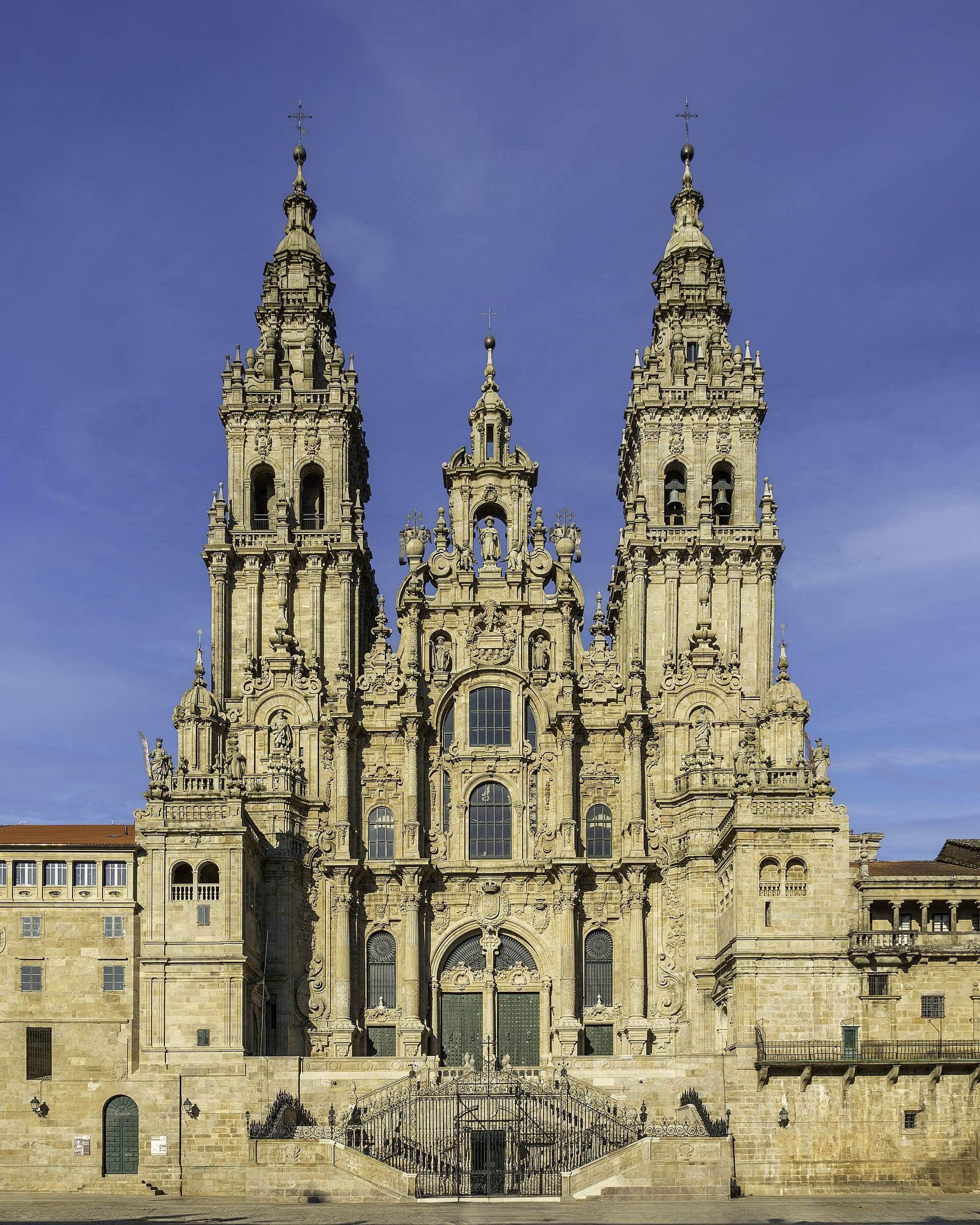
| Praza do Obradoiro Balcony of the Pazo de Raxoi | The whole square: the Hostal dos Reis Católicos on the left, the Obradoiro façade ahead and San Xerome on the right. | The best one for telling real rain from orballo, and for seeing how long the queue is before you walk down. Our guide → |
| Praza da Quintana East front of the Cathedral | The steps and the Holy Door, which opens on 31 December 2026. | At night, when the square empties and the lighting turns it into something else. And during the Xacobeo countdown. Our guide → |
| Praza das Praterías Casa do Deán, Rúa do Vilar | The Romanesque Praterías front, the oldest of the Cathedral's four façades. | Early morning, which is when the sun hits it. Our guide → |
| Monte Pedroso Above the city, to the northwest | A panorama of Santiago with the Cathedral towers standing out. | At sunset, and to watch the fog when it fills the valley. Our guide → |
Cameras along the Camino
| Camera | What you see | When to look |
|---|---|---|
| O Cebreiro Camino Francés · pilgrim hostel | The entrance to the O Cebreiro hostel, at around 1,300 m, between the Ancares and O Courel ranges. | At dawn, which is what people climb up there for. Also useful for checking fog or snow before planning that stage. Our guide → |
| Portomarín Camino Francés · last 100 km | Praza Conde de Fenosa, the church of San Xoán and the Camino going through. | Mid-afternoon: that is when the Sarria starters arrive, and you see how busy the stage really is. Our guide → |
| Tui Camino Português · km 100 | The old town of Tui, where the last 100 km of the Portuguese Way begin. | In the morning, when stages start. From here on you need two stamps a day. Our guide → |
| Ferrol Camino Inglés · km 0 | The port of Ferrol, where the English Way starts. | To see what the weather is doing on the coast the day before you start. Our guide → |
| A Coruña Camino Inglés · the 75 km branch | The city and the bay that the other branch of the English Way leaves from. | If you are deciding between starting in Ferrol or A Coruña and the weather is part of the decision. Our guide → |
| Lugo Camino Primitivo · last 100 km | The walled city the Primitivo passes through before its final stages. | Before deciding whether to join at Lugo or stay on the Norte. Our guide → |
| Fisterra Epilogue of the Camino | The harbour and the cape, the symbolic ending for those who carry on past Santiago. | At sunset, which is what you go to Fisterra for. And to check whether fog is going to ruin it. Our guide → |
| Muxía Epilogue of the Camino | The Virxe da Barca sanctuary and the sea breaking against the rocks. | In a storm, which is when Muxía shows you why it is worth the trip. Our guide → |
The two cameras inside the Cathedral have been frozen since 16 October
CRTVG had two cameras inside the basilica — one framing the central nave towards the high altar, the other a side aisle — and they were exactly the ones people came looking for. Both froze on 16 October 2026 at 6:30 in the morning and have been returning that same photo ever since, day after day. We checked for seven days straight, and it is not the caching problem described above: requesting them with a cache-busting parameter still returns 16 October, while the other twelve answer with an image from one minute ago in the same pass. So we have taken them off the list: a camera repeating last week's photo is not information, it is a link that wastes your time.
The date looks like no coincidence. 16 October 2026 is the day the Cathedral moved three of its four Pilgrim's Masses to the church of San Agustín for the remodelling of the high altar chapel, which is precisely what the central nave camera was pointing at. We have no confirmation from CRTVG that they will be restored once the work is done, so we are not promising it: if they start showing images again, they come back to this list.
While they are down, what we do keep up to date is the information people were opening that camera for: the twelve dates when the botafumeiro is guaranteed and the Pilgrim's Mass times, both from the calendar the Cathedral publishes itself. That said, the botafumeiro is not flying at the moment: the scaffolding from the dome restoration covers its mechanism, and the Cathedral confirmed to santiago.es in writing on 5 September 2026 that it is still out of service, with no return date. The liturgical calendar still lists the twelve dates unchanged, so it tells you nothing about whether it will swing that day.
The Camino ones are for deciding, not for watching
O Cebreiro and Portomarín are the most useful of the lot, and not for the scenery. O Cebreiro sits at 1,300 m and its camera tells you whether there is fog or snow before you commit to that stage. Portomarín in mid-afternoon shows you the reality of the Sarria stretch better than any statistic: if the square is full of backpacks, there is no bed that night without a reservation.
Tui and Ferrol are the two kilometre zeros of the last 100 km on the Portuguese and the English Ways. And Fisterra and Muxía are for those who carry on after Santiago.
Keep reading
Before you walk down
Botafumeiro times: when to see it
The twelve guaranteed dates of the year and where to stand to actually see it.
What you'll get
How many days a year does it rain in Santiago
The climate month by month and the best time to visit or walk.
Getting your bearings
Practical information
Luggage, pharmacies, tourist offices and the everyday details.