With kids
Santiago de Compostela with kids
The old town is granite, cobble and hill, not a theme park. It is also small enough to cross on foot in twenty minutes, with parks spaced along the edges — which is what makes it work with children, once you stop trying to see everything in a day.
- Museo do Pobo Galego
- Free under 18
- Cathedral roofs
- €12 under 12
- Botafumeiro
- Grounded since 24 Aug
By Cesar Rodriguez · updated
On this page
Nobody laid out Santiago with pushchairs in mind. It is a medieval stone city, it goes uphill in most directions, and the cobbles will find every loose screw in a set of small wheels. What it has instead is scale: the historic centre is compact, the parks sit within a ten- or fifteen-minute walk of each other, and children move through it more easily than the first climb up Rúa do Franco suggests. The trick is to alternate — one stretch of old town, one park — and to accept that you are not going to see it all.
The parks, one by one
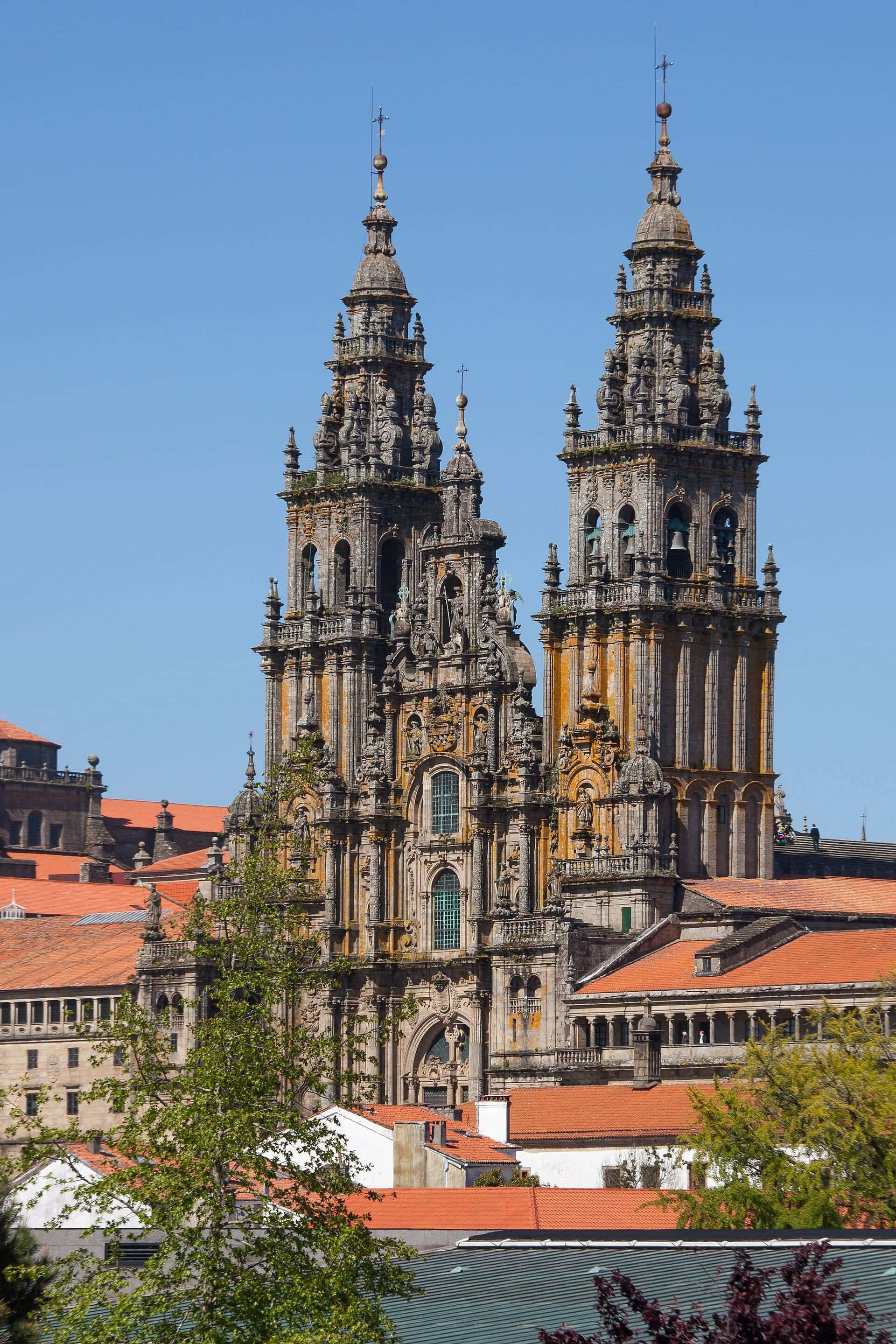
The Parque de la Alameda is the most central and the most complete. Its playground, on Rúa do Campiño da Ferradura, reopened in November 2023 after a €300,500 rebuild as an inclusive play area: castle, small house, carousel, swing, zip line, sand, and a rubber surface a wheelchair can cross. It is designed for ages 3 to 12. A minute away, the Paseo da Ferradura viewpoint gives the best view of the Cathedral in the city, framed by the trees — worth the detour even when everyone has had enough.
The Parque de Belvís sits about 25 metres from the Mercado de Abastos, with a stream, drinking fountains and a playground: the easiest thing in the city to slot between the market and the walk back. The Parque de Bonaval, laid out by Álvaro Siza on an old convent orchard, has swings on artificial grass and a Chillida sculpture, but a warning that matters with wheels: it is terraced down a hillside and the level changes are steep, so with a pushchair go in from the top and walk down. Further out, the Parque de Carlomagno (As Fontiñas, about 30 minutes on foot) and the Parque Eugenio Granell, by the river Sar near the train station, give more open ground and far fewer people, if what you need is somewhere they can run without dodging anyone.
Museums that work with children
The Museo do Pobo Galego, the Galician folk museum in the old convent of San Domingos de Bonaval, has one thing that sells itself on sight: a triple spiral staircase, three flights winding upward without ever meeting. Letting them climb and come back down twice is usually enough to justify the visit. It opens Tuesday to Saturday, 11:00–18:00 straight through, Sundays and public holidays 11:00–14:00, and closes on Mondays. Admission is €5, and the part worth knowing before you queue: under-18s go in free, every day, not only on Sundays. Sunday is when the adults get in free too.
Up on Monte Gaiás, the Cidade da Cultura runs Galiverso, a free virtual reality experience that you have to book. Since 29 July 2026 the current programme is Galiverso explora o ceo — night skies over Galicia and a 360° simulation of the total solar eclipse — and it runs Tuesday to Sunday, 11:00–14:00 and 16:00–20:00, in groups of eight every 45 minutes, with last entry at 13:15 and 19:00. The minimum age for the headset is 8, and under-12s have to be accompanied by an adult throughout. Two things to plan around: the complex is on the edge of town, so it is a bus, a car or a long walk, and the programme changes — check what is running before you build the afternoon around it.
The USC's Museo de Historia Natural costs €3.50, with reduced rates of €2.50 and €1.50 and free entry for under-3s. The useful detail nobody advertises: it is free on the first Wednesday of every month. In winter it opens Tuesday to Saturday 10:00–14:00 and 16:30–20:00; from 23 June to 13 September it shifts to 11:00–14:00 and 16:30–20:30. Sundays and holidays 11:00–14:00, closed Mondays. It is the reliable fallback when the weather turns, and it is a fifteen-minute walk from the centre.
Free and central, the CGAC— the contemporary art centre across the road from Bonaval — costs nothing every day except Monday, and the Cidade da Cultura's own exhibitions are free as well. All the opening times are collected on the opening hours and tickets page.
The Cathedral with children, and what not to promise
The nave is free to walk into and there is no reason not to. The two things families usually plan around need more care.
The roof visit costs €15, with a reduced rate of €12 that includes under-12s — you prove it at the entrance, not when you book. It climbs 140 steps up an interior tower stair, crosses the stepped granite roofs and ends at the Torre da Carraca, around 72 metres up; it takes about an hour. The Cathedral publishes no minimum age, so the decision is yours, and the honest version is that the deciding factor is not the child's age but whether a narrow tower staircase and an open roof at 72 metres is something they will enjoy rather than endure. Details and what you actually see are on the Cathedral roofs page.
The botafumeiro is the one to be careful with, because it is the thing children come for. It is temporarily grounded: the restoration of the dome has lowered its scaffolding over the mechanism the censer hangs from. The mechanism is not broken, the scaffolding is in the way, and the Cathedral confirmed to us in writing on 5 September 2026 that it remains out of service; since mid-September its website has carried a notice too, with no return date. Do not build the trip around seeing it fly without checking first — the current state is on the botafumeiro page.
Pushchairs, hills and wet days
On the steepest streets of the old town a baby carrier beats a pushchair outright. Elsewhere an ordinary pushchair copes, though you will feel every joint in the granite setts. Two flat, easy routes worth knowing: the Alameda loop itself, and the walk between Belvís and the market, which is short and mostly level. The accessible Santiago guide maps the step-free routes and the gentlest gradients, and those are the same routes that work with wheels of any kind.
It rains here about 140 days a year, so a wet-weather plan is not a contingency, it is part of the itinerary. The museums above all work under cover, and the wider version is in what to do in Santiago when it rains. If you would rather get out of the city for a day, several of the day trips from Santiago work well with children — the ones that put a beach or a river at the end of a short drive, rather than another old town.
Something sweet at the end
The centre has real ice cream and chocolate shops rather than chain outlets: Heladería Puerta Real (Rúa do Franco and Rúa do Preguntoiro), artisan ice cream from an Italian maestro heladero; Casa Doce, in the premises that were the Café Bar Metate for eighty years; Xearte Brigitte, in San Pedro, right where the Camino Francés comes into the city; and Heladería Cinco Calles, in a converted stationer's. Any of the four works as the reward at the end of a day of museums and cobbles. If it is cake you are after instead, the shops that still bake their own are listed in the best Tarta de Santiago.
| Plan | Price | Worth knowing |
|---|---|---|
| Parque de la Alameda playground | Free | The most central; inclusive, ages 3-12; Cathedral viewpoint next door |
| Museo do Pobo Galego | €5 · free under 18 | Triple spiral staircase; Tue-Sat 11:00-18:00, closed Mondays |
| Galiverso (Cidade da Cultura) | Free, booking required | Headset from age 8; under-12s accompanied; groups of 8 |
| Museo de Historia Natural (USC) | €3.50 · free under 3 | Free on the first Wednesday of the month |
| CGAC contemporary art | Free | Every day except Monday, opposite Bonaval park |
| Cathedral roofs | €15 · €12 under 12 | 140 steps, about an hour; no minimum age published |
Frequently asked questions about Santiago with children
Is Santiago de Compostela easy to visit with small children?
It takes more effort than a flat city: the old town is cobbled and hilly, and a pushchair struggles on the steepest streets. In exchange it is small, safe and has parks spread around the edge of the centre, so alternating a square with a park makes the day manageable. A baby carrier is better than a pushchair for the old town itself.
Which museums in Santiago are free for children?
The Museo do Pobo Galego is free for under-18s every day it opens, and free for everyone on Sundays. The CGAC is free every day except Monday, the Cidade da Cultura exhibitions are free, and its Galiverso virtual reality experience is free with a booking. The Museo de Historia Natural is free for under-3s and free for everyone on the first Wednesday of the month.
Are there playgrounds near the historic centre?
Yes. The closest is the Alameda, a short walk from the Obradoiro, rebuilt in 2023 as an inclusive play area for ages 3 to 12 with a rubber surface. The Belvís playground is about 25 metres from the Mercado de Abastos, which makes it an easy pairing with a market visit.
Can children go up on the Cathedral roofs?
The Cathedral publishes no minimum age. The general ticket is €15 and under-12s pay the reduced rate of €12, proved at the entrance rather than at booking. The visit is 140 steps up an interior tower staircase, an hour long, and ends on an open roof around 72 metres up, so it depends on the child rather than on a rule.
Will we see the botafumeiro swing?
Not right now. Since 24 August 2026 the botafumeiro has been temporarily grounded because scaffolding from the dome restoration covers the mechanism it hangs from, and the Cathedral, which now flags it on its website, has given no return date. Check before promising it to anyone.
What do we do with the kids if it rains in Santiago?
The museums in this guide — Pobo Galego, Historia Natural, Galiverso, the CGAC — all work under cover, and the arcades on Rúa do Vilar let you cross much of the old town without getting wet. The full wet-weather plan is in our guide to Santiago in the rain.
Keep reading
Visiting
What to see in Santiago de Compostela
The essential route through the Cathedral, the squares and the museums of the old town.
Wet days
Santiago in the rain
The indoor plan for the 140 days a year the sky does not cooperate.
Step-free
Accessible Santiago
Routes without steps, adapted transport and what actually works on wheels.