Stage 4 of 5
Hospital de Bruma → Sigüeiro
24.4 kilometres on a friendly profile, but the thinnest day for services on the route — and the only stage that ends in a town with no public hostel.
- Distance
- 24.4 km
- Approx. time
- ~6 h
- Elevation
- +213 m / −374 m
- Difficulty
- 2 of 5
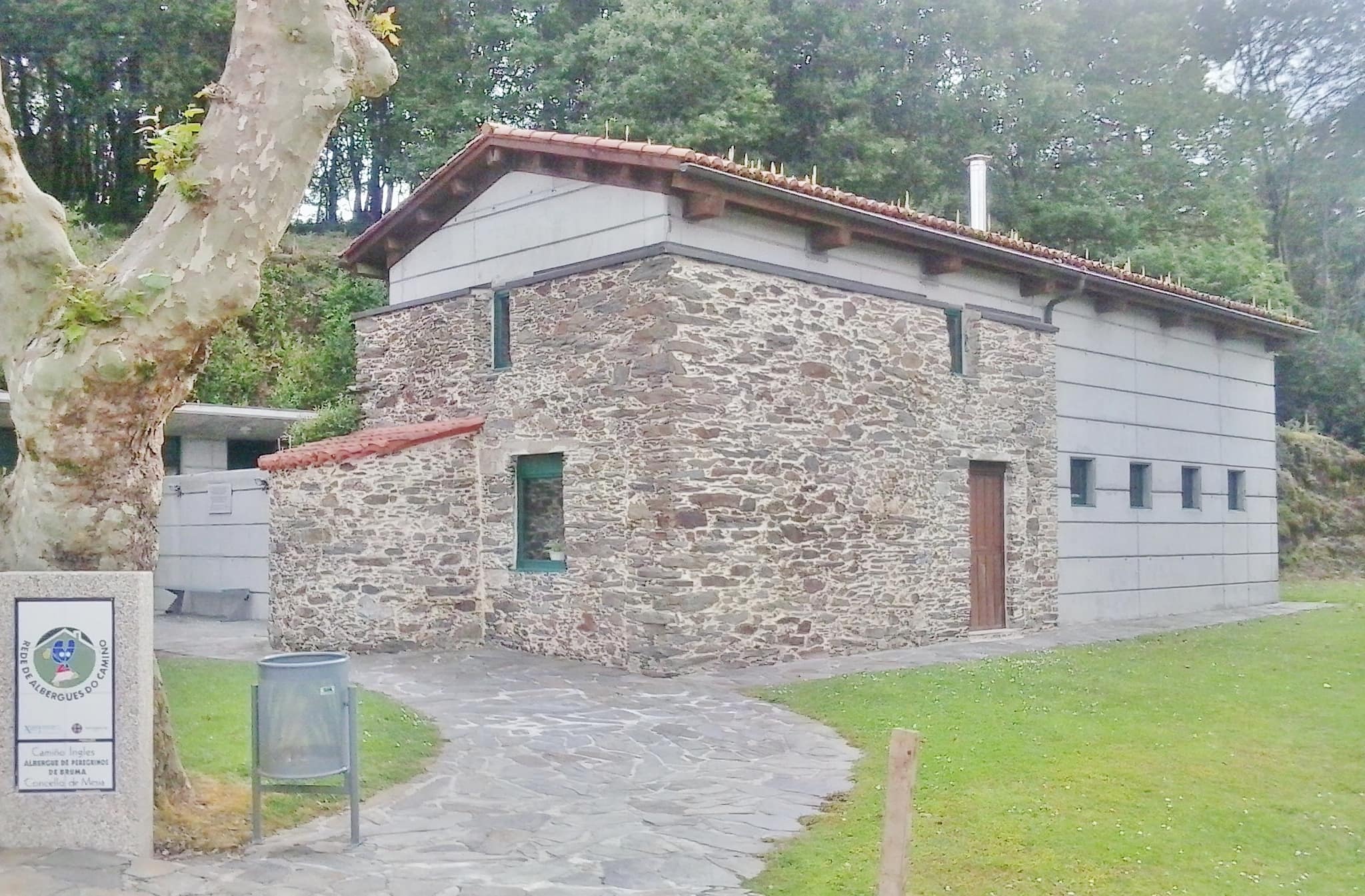
By Cesar Rodriguez · updated
The profile is favourable — descents outweigh climbs — and the technical difficulty is low, but Gronze warns that it is a stage "very short on services". The real difficulty of this day is not in the legs but in the planning: you have to decide before setting out where you are going to sleep, because the usual public option does not exist at the far end.
The route, village by village
You leave Bruma towards O Castro, already in the Ordes district (3.1 km), with a sculpture park but no bar. The first resupply comes at A Rúa (7 km), with two bars and the church of San Paio de Buscás. Shortly after, at O Outeiro-Poulo (9.8 km), is the Xunta hostel "Rectoral de Poulo", at the standard 10 € and with about 42 beds: it is the only public hostel on the whole stretch, though it sits halfway through the stage.
Then A Calle (11.6 km), with a bar and a stone cross, and further on A Baxoia (17-18 km), with the Fonte da Santiña. The rest of the way runs in several stretches hard against the AP-9 motorway, with its noise in the background and the odd underpass beneath it, until you reach Sigüeiro. Bars are scarce above all in the first half of the day: make use of A Rúa and Poulo to restock.
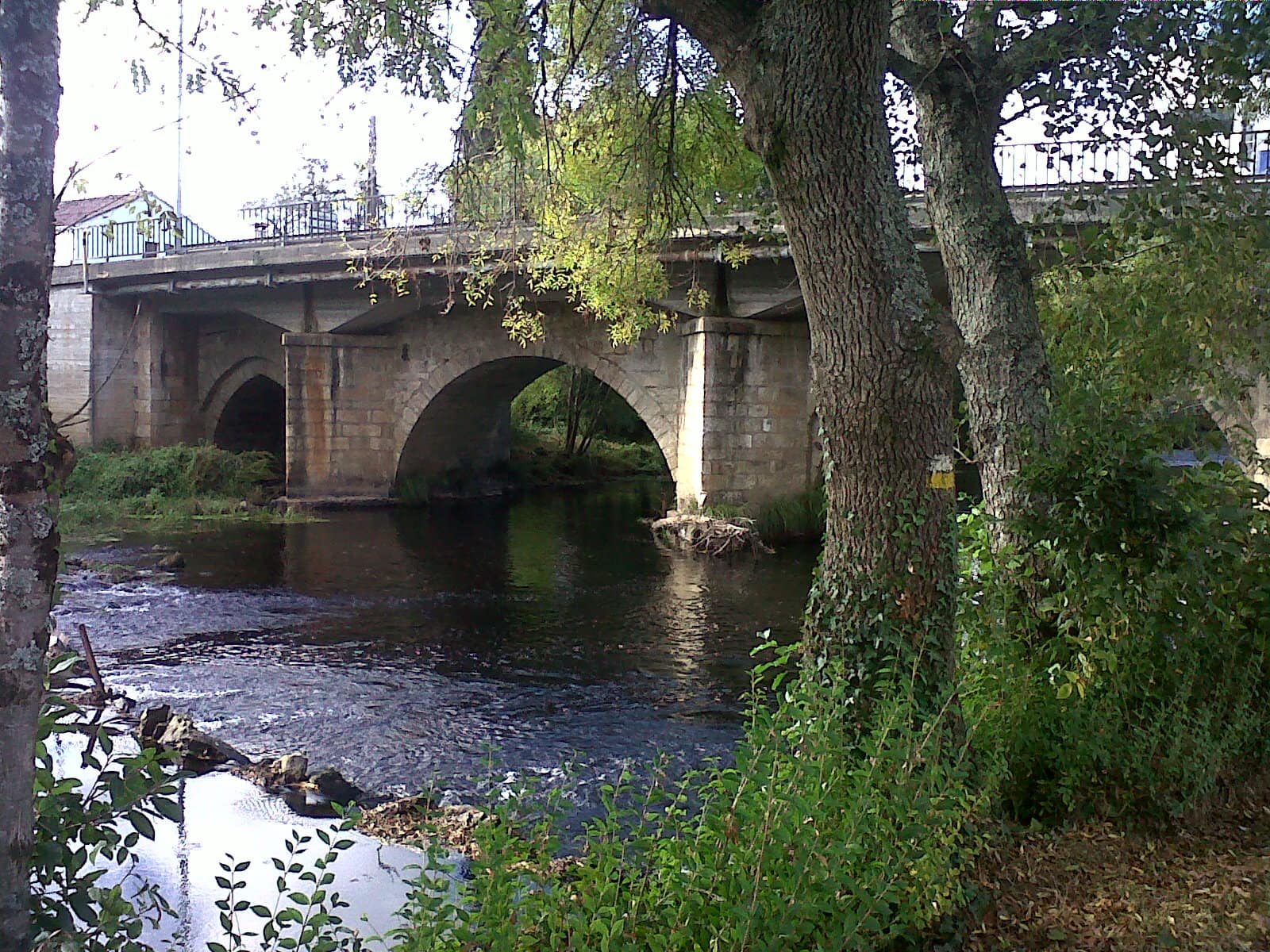
A bridge with the Andrade signature
At the entrance to Sigüeiro you cross the river Tambre on a bridge of medieval origin, with an inscription that tradition attributes to Fernán Pérez de Andrade — the same noble who turns up on the bridge and tower in Pontedeume and on the tomb in Betanzos. It is the thread that ties three different stages of this same route together.
If you cannot go on: getting out of Hospital de Bruma
It is the question asked most often about this stage on the forums, and the answer is not a comfortable one: no bus leaves Hospital de Bruma for Santiago or A Coruña. We checked the Xunta's public transport search (bus.gal, query of 17 September 2026 for a Friday): zero results, with or without a change. The only service that stops in Bruma is the 8:34 XG800 to Ordes, and only on weekdays during school term. Four things that do work:
- Taxi to Ordes or Sigüeiro, then the bus. Ordes, the district town, is about 15 km from Bruma by road and has line XG817 to Santiago bus station: 13 departures Monday to Friday (5:52 to 21:49, about 36 minutes), 4 on Saturdays and 6 on Sundays. From Sigüeiro the same line takes about 20 minutes, with 12 weekday departures. Ask the albergue for the taxi number; we have not verified fares, so we do not publish one.
- If the problem shows up before you leave Betanzos, there are buses and trains there; it is the last town on the route with real transport until Sigüeiro.
- An injury you can walk slowly on has another way out: cut the stage at Poulo (9.8 km) or A Rúa and leave the rest for the next day. The public Bruma albergue takes no bookings, so sleeping there again depends on beds being left; the private San Lorenzo de Bruma (+34 619 464 240) does take them.
- Medical emergency: 112. The nearest health centre to the albergue is in Xanceda (Mesía); for anything more, the referral hospital is in Santiago.
And one sum to do before getting into the taxi: from Ferrol it is 111.5 km and the Compostela requires the last 100 on foot. Skipping this whole stage (24.4 km) leaves you at 87 km and the certificate does not come. Skipping only a section and picking up again at Poulo or A Rúa keeps it, provided the day's stamp shows it.