Countdown
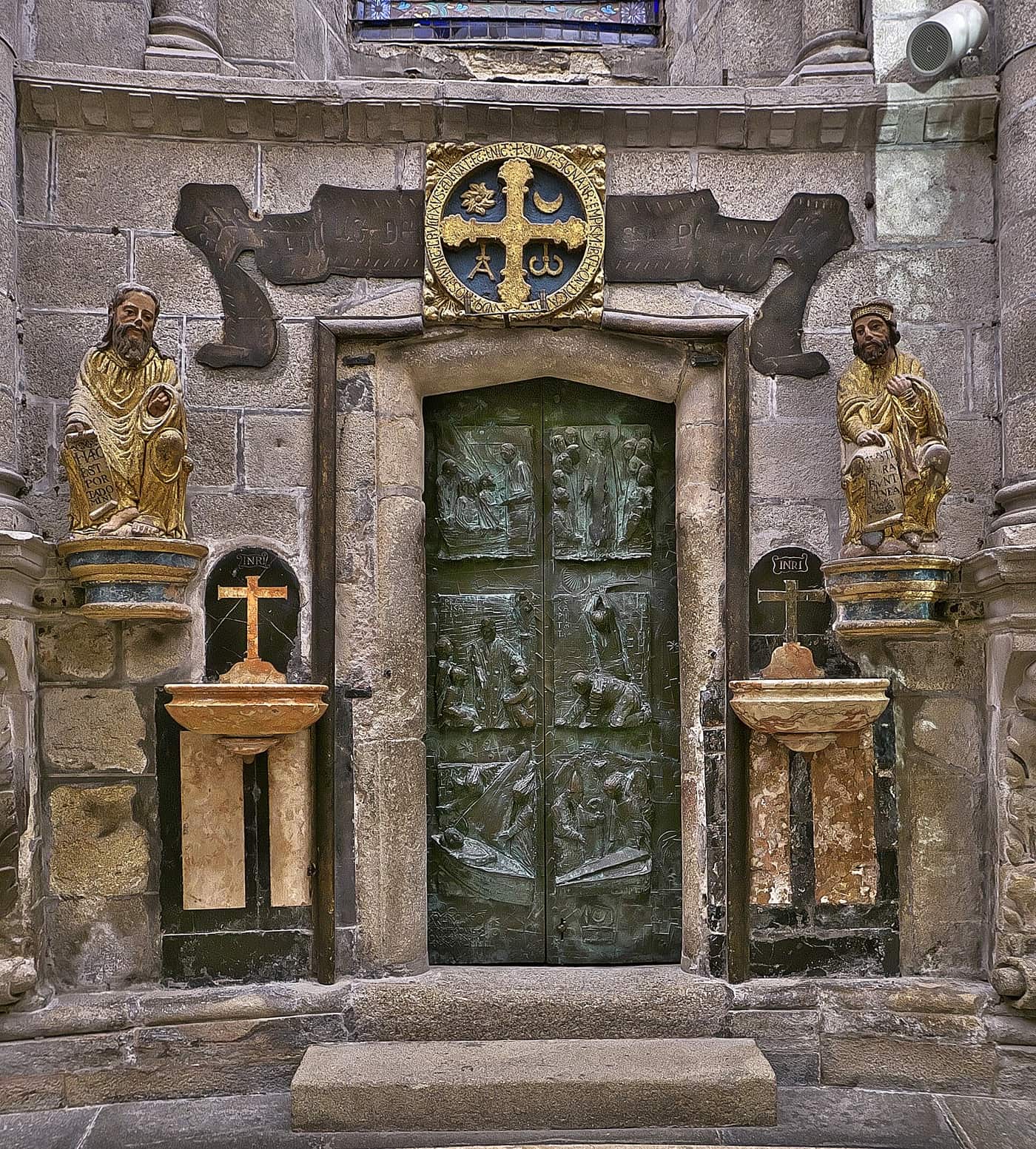
Holy Door, 31 December 2026: the countdown to Xacobeo 2027
At midday on 31 December 2026 an archbishop will strike the Holy Door three times with a silver hammer and open it with a key. From that moment Santiago enters the biggest year in its calendar.
By Cesar Rodriguez · updated
On this page
Updated on 28 September 2026.
If you have heard the word «Xacobeo» without being sure what it means, you are in good company. The Compostelan Holy Year is probably the single thing that changes Santiago most of everything covered in this guide, and 2027 is going to be one. Here is what it means and why it is worth planning around. For the full detail — dates, the Holy Door ceremony and when to come — we have the complete Holy Year guide.
What a Holy Year actually is
A Xacobeo happens only when 25 July — the feast of Saint James — falls on a Sunday. Because the calendar does not hand out Sundays at regular intervals, the gap between one Holy Year and the next is not fixed: it follows an irregular cycle of 6, 5, 6 and 11 years. During a Holy Year, pilgrims who complete the Camino, visit the Cathedral of Santiago and cross the Holy Door can obtain a plenary indulgence, one of the central acts of the Jacobean tradition.
The recent precedent: the double Xacobeo of 2021-2022
The last Holy Year did not follow the usual script. The COVID-19 pandemic led to it being extended exceptionally into a double cycle, 2021-2022, so that the 2021 Xacobeo could be lived properly the following year. It was an anomaly within the historical calendar of the Camino. With the natural rhythm resumed, the next Holy Year — the first «normal» one since then — is 2027.
When the Holy Door opens
The Holy Door, also called the Door of Forgiveness, stays shut the rest of the time and opens only during a Holy Year. The opening for Xacobeo 2027 will be on 31 December 2026, at midday — a time brought forward by the Archdiocese on 24 September 2026, without giving an exact hour, and not yet reflected in the Cathedral's liturgical calendar — in a ceremony in the Praza da Quintana where the Archbishop strikes three times with a silver hammer and opens the door with a key. No stone wall is knocked down any more: none was built in 2020, to avoid raising dust inside the freshly restored Cathedral. From that moment the door stays open every day of the year, until it closes again on 31 December 2027.
The next Holy Years
After 2027 the calendar spaces out again along the same irregular pattern. The Xacobeos that follow, barring another exceptional change like the one in 2021, fall in 2032, 2038 and 2049.
| Year | Note |
|---|---|
| 2027 | Next Holy Year. Holy Door open from 31 Dec 2026. |
| 2032 | Next in the regular cycle (+5 years). |
| 2038 | Next in the regular cycle (+6 years). |
| 2049 | Next in the regular cycle (+11 years). |
2026, the year we are in, is not a Holy Year: the Holy Door stays shut until it opens at the end of December. Which is precisely why it is a good moment to see Santiago at a calmer pace, before the big year starts.
Frequently asked questions
Is 2026 a Holy Year in Santiago?
No. 2026 is not a Xacobeo. The next Holy Year is 2027, and the Holy Door opens on 31 December 2026 to usher it in.
What do I gain by walking during a Holy Year?
Anyone who completes the Camino, visits the Cathedral and crosses the Holy Door during a Holy Year can obtain a plenary indulgence, one of the central elements of the Jacobean tradition.
Why isn't the Xacobeo held every fixed number of years?
Because it depends on 25 July falling on a Sunday, which the calendar does not arrange regularly. The real interval follows a cycle of 6, 5, 6 and 11 years.
Was 2025 a Holy Year?
No. The last Xacobeo was the extraordinary 2021-2022 cycle, extended because of the pandemic. The next one, back inside the normal calendar, is 2027.
Related
Full guide
Xacobeo 2027: the complete Holy Year guide
Key dates, the Holy Door, when to come and everything the city is preparing for 2027.
Camino
Arriving in Santiago: mass, botafumeiro and traditions
The Holy Door, the embrace of the Apostle and everything people do on the day they arrive.
News
530,987 pilgrims: 2025 breaks the Camino's record
With numbers already climbing, the next Holy Year looks set to be the busiest yet.