Eating and drinking
Where to buy the best Tarta de Santiago
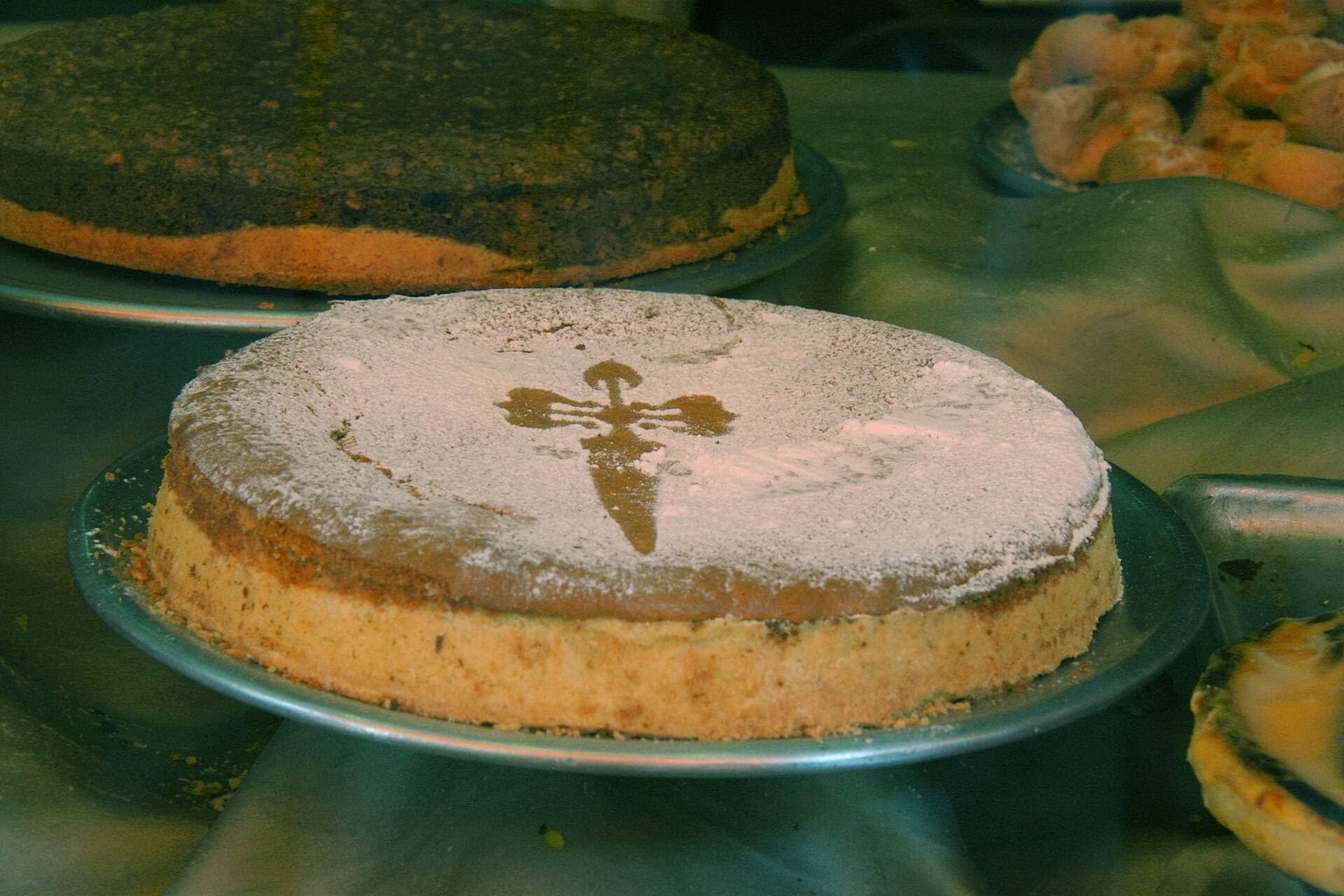
Ground almonds, eggs, sugar and the stencilled cross on top: the city's official dessert is sold on every corner, but not every tarta is equal.
By Cesar Rodriguez · updated
On this page
Tarta de Santiago is deceptively simple: ground almonds, eggs and sugar in roughly equal parts, with a touch of lemon or cinnamon. It carries no flour — or shouldn't — and that is the first clue separating a serious tarta from a sponge in disguise. The second clue is the label: the Protected Geographical Indication (PGI) requires a minimum of 33% almonds. For many pilgrims, picking one up is as much a ritual of finishing the Camino as the walk itself.
How we choose
We taste, compare almond ratio, moisture and citrus balance, and favour in-house obradores over mass-distributed cakes. No payments, no strings. Bakeries marked ✓ Verified have confirmed their details with us; the rest is editorial judgement that may fall out of date.
The bakeries
Flor y Nata
A neighbourhood bakery that works almond like few in the city — turrón, marzipan, almendrados and, of course, the tarta — and sells it alongside the morning bread and pastries. Five minutes from the Alameda and off the pilgrim shop-window circuit, which is why the queue is made of locals. Open 8am to 2pm daily.
Avenida de Rosalía de Castro, 37 · by the Alameda park
Pastelería Míguez
Santiago's best-known pastry shop, with its own bakery and hours that rescue any plan: 7am to 10pm every day. Its «tarta de almendra artesana» is the house tarta de Santiago, and the individual tartlet is the right-sized portion to try it on a bench in the Alameda without carrying a whole cake around.
Rúa da Senra, 12 · 3 min from the Alameda · Whole €14 · tartlet €4
Mercado de Abastos bakery stalls
The market's pastry stalls sell small-batch tartas from local obradores, many carrying the PGI label. Buying one here alongside the day's shopping is the closest you'll get to doing it like a neighbour.
Mercado de Abastos · From ≈ €12 whole
What to check before buying
- The PGI label: it guarantees at least 33% almonds and a controlled recipe. Not every good tarta carries it, but every tarta that carries it meets a floor.
- The ingredient list: almonds, sugar and eggs should come first. If flour appears early, you're looking at a sponge with a cross.
- The weight: a dense tarta is heavy. Half-kilo cakes under €10 rarely contain the almonds they claim.
- Taking it home: wrapped, it keeps for a week and passes airport security in hand luggage; many bakeries sell it pre-sealed for travel. If you still need somewhere to leave a bag before your flight, our practical info guide covers left-luggage options.
| Bakery | Why | Guide price |
|---|---|---|
| Flor y Nata | Almond-specialist bakery | Not published |
| Pastelería Míguez | Bakes its own; open 7am-10pm | €14 whole · €4 tartlet |
| Mercado de Abastos | Small-batch obrador tartas | From €12 whole |
Frequently asked questions
Where can I buy the best Tarta de Santiago in Santiago de Compostela?
From a bakery that actually makes it: Flor y Nata (Rosalía de Castro 37), an almond specialist, and Pastelería Míguez (Rúa da Senra 12), with a whole cake at €14 and a tartlet at €4. The market stalls at the Mercado de Abastos also carry small-batch tartas. One warning: the historic Mora confectioners on Rúa do Vilar no longer exist — Casa Mora closed in 2002 and Mercedes Mora in 2025 — though plenty of guides still recommend them.
How much does a Tarta de Santiago cost?
A café slice runs €4-5; a whole bakery tarta between €12 and €24 depending on weight. Very cheap ones usually skimp on almonds — the expensive ingredient.
What does the PGI label mean?
The Protected Geographical Indication has regulated the cake since 2006: it must be made in Galicia with at least 33% almonds, among other recipe requirements. It's the quickest way to spot a serious tarta.
Does Tarta de Santiago contain flour?
The traditional one, no: only ground almonds, sugar, eggs and an aroma (lemon or cinnamon). If flour ranks high on the ingredient list, it's an almond sponge, not a canonical tarta.
Can I take a tarta on the plane?
Yes: wrapped or sealed it travels perfectly and clears security in hand luggage. Many bakeries will pack it for transport.
Keep reading
The big list
The best restaurants in Santiago
Michelin stars, eating houses and market cooking: the full selection.
The signature dish
The best pulperías
Where to eat proper octopus á feira in Santiago.
The overview
Where to eat in Santiago
The essential dishes, the tapas streets and what you'll spend.