Stage 6 of 6 · The arrival
Padrón → Santiago
24.4 kilometres, the longest day of the whole Camino Portugués from Tui. A warning if you are coming from the Francés: there is no Monte do Gozo here — this route enters Santiago from the south.
- Distance
- 24.4 km
- Approx. time
- 5-6 h
- Elevation
- +405 m / −157 m
- Difficulty
- 2 of 5
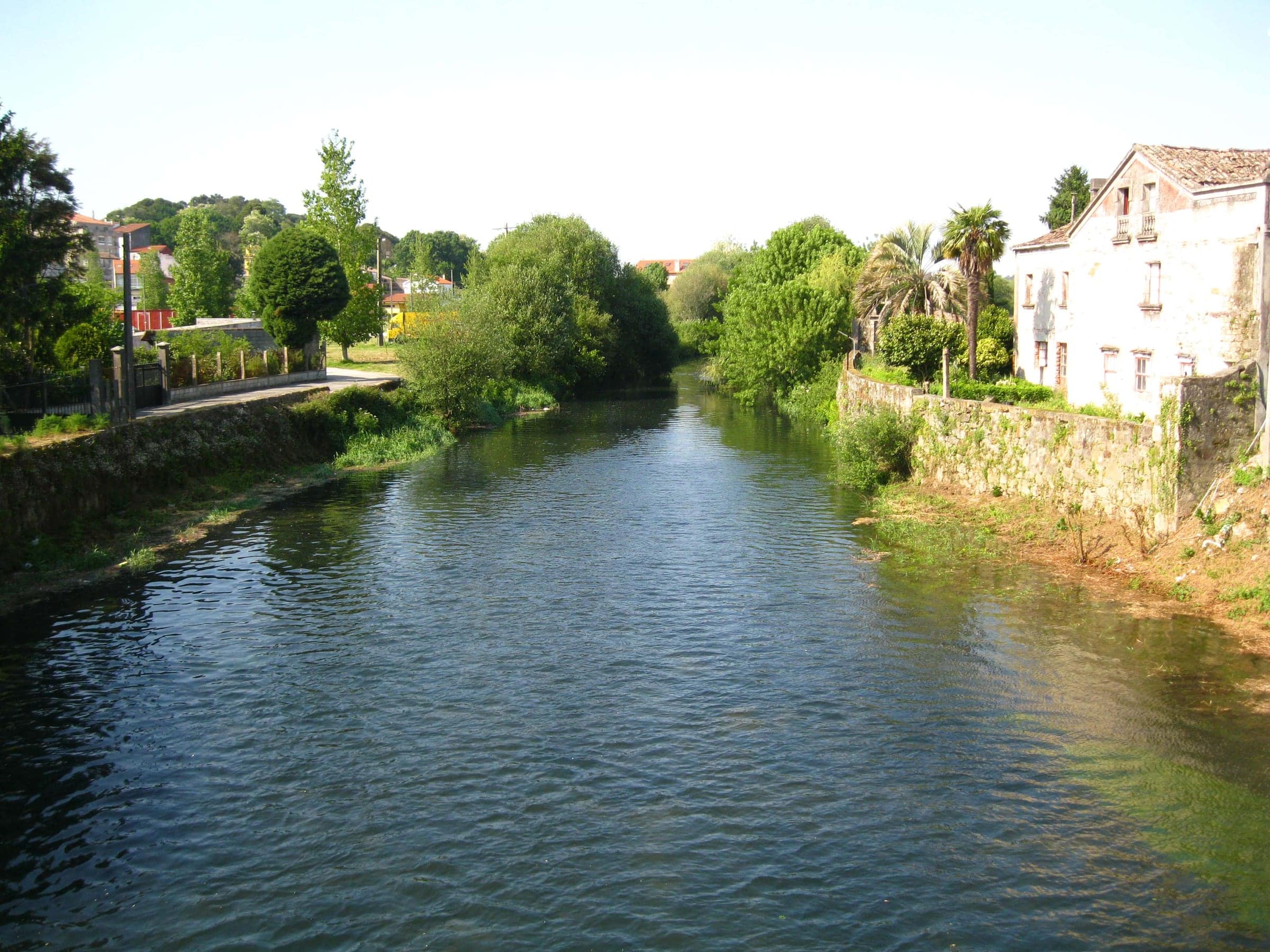
By Cesar Rodriguez · updated
On this page
Gronze.com gives 24.4 km for this last stage, though other sources put it between 23.7 and 25.2 km: either way it is the longest day of the whole Camino Portugués from Tui. And a warning if you are coming from the Francés: there is no Monte do Gozo here — that belongs to the other route — because the Portugués enters Santiago from the south.
The route, village by village
Barely a kilometre from Padrón is Iria Flavia, with its collegiate church — Galicia's first episcopal seat — and the grave of the writer Camilo José Cela, under an olive tree in the atrium. Then A Escravitude (3-6 km), with its Baroque sanctuary and a bar, and further on O Faramello (10.4 km), where a 150-metre detour leads to the Xunta hostel in Teo (20 beds, 10 €) for anyone who prefers to split the stage.
After Rúa de Francos (11.1 km), with its stone cross, the Camino reaches O Milladoiro(16.9 km), the settlement with the most services on the whole stage and the logical place for a last shop before Santiago. The name comes from "humilladoiro": this is where pilgrims knelt on first sighting the Cathedral towers.
The entry into Santiago
From O Milladoiro the Camino drops towards the river Sar and enters the old town from the south, passing neither Monte do Gozo nor Lavacolla — those landmarks belong to the Camino Francés. The last streets lead straight to the Praza do Obradoiro and the Baroque façade of the Cathedral.
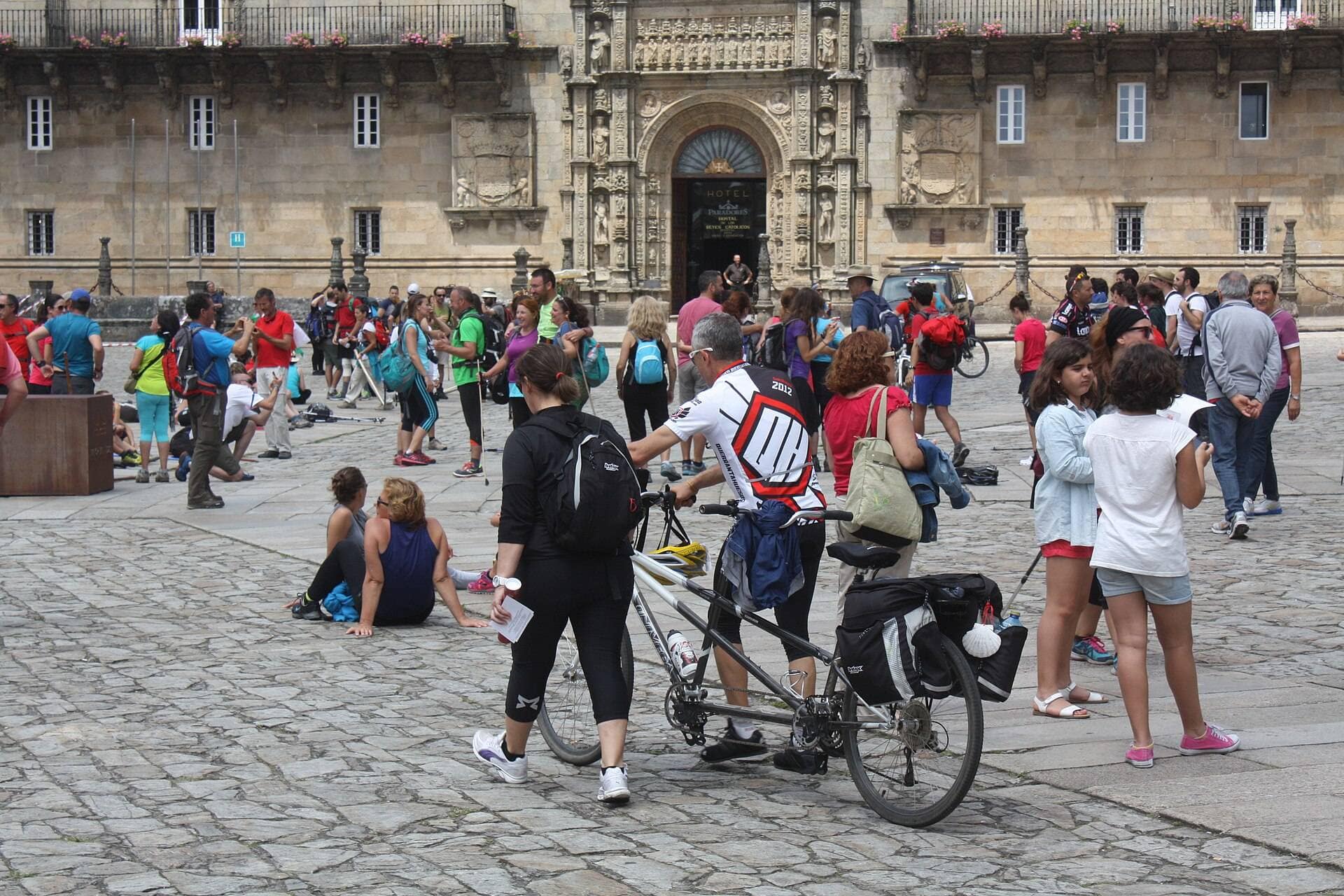
What to do when you arrive
The logical first step is the Pilgrim's Reception Office, at Rúa das Carretas 33, open every day from 9:00 to 19:00 (closed 25 December and 1 January). It works with a ticket and QR code so you can follow the queue from your phone; in high season you will not always get the Compostela the same day, so do not leave it until the last minute. Remember that over the last 100 km you need to stamp twice a day: the office spot-checks that dates and stamps match the itinerary you declare.
The pilgrim's mass still runs four times a day — at the High Altar until 15 October 2026 and, from the 16th, in the church of San Agustín, except the 7:30 am one — but the botafumeiro is grounded, and has been since 24 August 2026 because of the cimborrio scaffolding, with no return date. Do not time your arrival around it. If you are staying the night, our pick of albergues in the old town saves you walking back with the pack. For the rest, the details are in the guide to what to do on arriving in Santiago, and for the exact requirements on kilometres, stamps and the difference between the Compostela and the Distance Certificate, the guide to the Compostela and the credential.
Two decisions are left for after the Obradoiro: how many nights to stay in Santiago before moving on, and what to do if you came from Portugal and the plan is to go back — there are direct coaches to Porto in under three hours.
Frequently asked questions
Why does this stage not pass Monte do Gozo?
Because Monte do Gozo is a landmark of the Camino Francés, which enters Santiago from the east. The Camino Portugués comes in from the south, through O Milladoiro, and reaches the Praza do Obradoiro by a different route.
Where do I collect the Compostela arriving on the Camino Portugués?
At the same Pilgrim's Reception Office as every other route, at Rúa das Carretas 33, open every day from 9:00 to 19:00. The ticket-and-QR procedure is identical whichever route you have walked.
Is crossing the N-550 dangerous on this stage?
It is not a dangerous stage if you stay alert, but it crosses the N-550 as many as four times and also the high-speed railway at Rocha Nova. Worth knowing in advance so you do not get complacent on the final stretch.
Keep reading
In Santiago now
Arriving in Santiago: mass, botafumeiro and traditions
Everything that happens after the Obradoiro, with the 2026 restoration notice.
Paperwork
The Compostela and the credential, step by step
Requirements, stamps and where to collect it at the Pilgrim's Reception Office.