Without overspending
Santiago on a budget
Much of the best of this city costs nothing at all. Here is how to see all of it — and eat and sleep well — without the bill running away.
By Cesar Rodriguez · updated
On this page
Santiago has an advantage that is rare among Europe's monumental cities: the most important thing to see is free. The cathedral, the squares, the viewpoints, most of the museums. What does cost money — eating, sleeping, getting around — has a cheap version too, and it is not a second-rate one. It is simply how most of the people who live here do it.
Everything that costs nothing
The cathedral is free to enter, every day from 7:00 to 21:00, through the Praterías door. One practical catch: you cannot go in with a rucksack, so if you have just walked in you will need to leave it somewhere first. The four squares of the old town — Obradoiro, Quintana, Praterías, Inmaculada — and the viewpoints, such as the one in the Alameda park, cost nothing and are, for a lot of people, the most memorable part of the visit. The CGAC contemporary art museum is free every day; so are the exhibitions at the Cidade da Cultura; and the Museo do Pobo Galego is free on Sundays. And there is one plan that costs nothing and moves people as much as any monument: sitting in the Obradoiro around midday to watch pilgrims arrive who have just finished the Camino.
Only the cathedral museum, which is how you see the Pórtico da Gloria and the roofs, charges admission. Everything else inside the building is free.
Eating without emptying your wallet
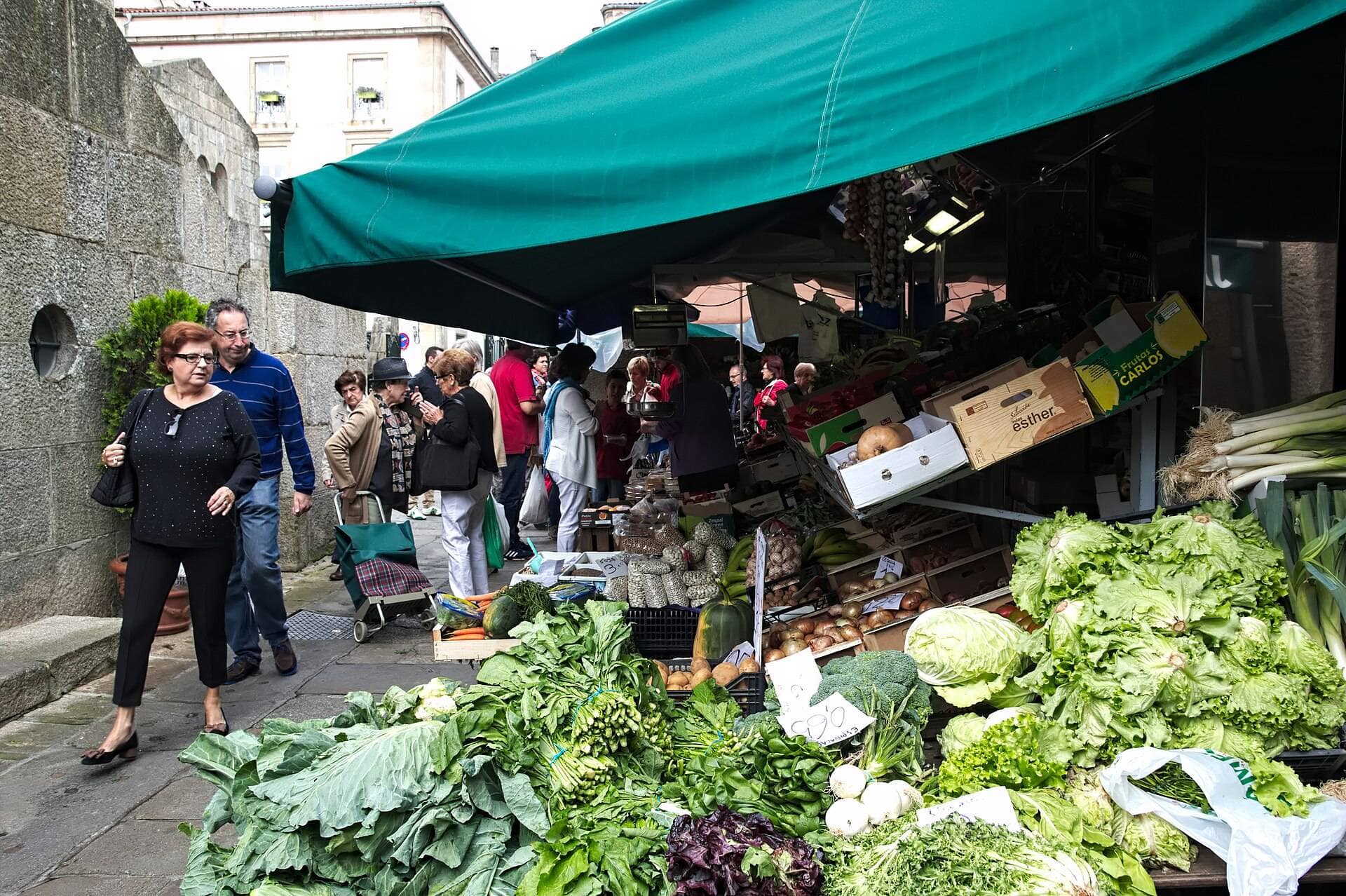
The menú del día, the set lunch, runs about €10 to €15 in the centre, starter, main and pudding included. It is served at lunchtime only, which is the single biggest saving available to you here. If you would rather graze, Rúa da Raíña charges less than Rúa do Franco for much the same plates — the unwritten rule is that the further you walk from the Obradoiro, the lower the price. A slice of empanada from a neighbourhood bakery costs a couple of euros and is a decent meal standing up. And the Mercado de Abastos is worth an hour whether or not you buy anything: it is the best Galician produce in the city without a restaurant bill attached.
Sleeping cheaply, and the €10 bunk you probably cannot have
This is where most budget guides to Santiago get it wrong, so it is worth being exact. The two public albergues run by the Xunta charge €10 a night — but they are for pilgrims holding a stamped credencial, one night only, and they take no reservations. If you walked or cycled here, that €10 bunk is genuinely yours. If you flew in, it is not, whatever a price-comparison page may suggest.
For everyone else the cheapest honest bed is a private albergue: dorms from about €14, and €20 to €26 for the best-located ones. They are more flexible and generally admit travellers without a credencial, though the atmosphere and the rhythm — shared dorms, curfews — are built around people arriving on foot. Above that, a guesthouse in the old town usually runs €36 to €68. Outside July, Easter week and 25 July, prices fall sharply: travelling in the shoulder or low season is by far the cheapest way to sleep well in the centre.
Getting around free, or nearly
You can cross the whole old town on foot in twenty minutes, so you do not need to spend anything on transport inside the city. To get in from the airport or the station, the city bus costs €1 paying the driver, or €0.36 with a travel card — which only pays off if you are staying a while.
The tourist tax, which budget guides forget
Since 1 October 2025 Santiago charges a municipal surcharge on the Galician tourist stays tax, per person per night, for the first five nights only. For the places in this guide it is €1 in private albergues and €1.50 in guesthouses. It is small, but it is real and your accommodation collects it, so count it in.
Two exemptions worth knowing: under-18s pay nothing, and neither does anyone sleeping in the Xunta's public albergues or in youth hostels. So the pilgrim on the €10 public bunk pays no tax at all.
| Item | Rough cost |
|---|---|
| Bed (private albergue dorm) | €14 – €20 |
| Tourist tax | €1 |
| Breakfast and coffee | €3 – €4 |
| Set lunch (menú del día) | €12 |
| Evening plates, two or three shared | €10 – €12 |
| Cathedral, squares and viewpoints | €0 |
| Rough total | ≈ €40 – €49 |
If you have just walked in and hold a credencial, swap the first two rows for the €10 public bunk and the tax exemption, and the same day comes to about €35. That is the cheapest Santiago can honestly be done for without skipping meals.
Frequently asked questions
Can you see Santiago without paying for tickets?
Yes. The cathedral, the squares of the old town, the CGAC and the exhibitions at the Cidade da Cultura are all free. Only the cathedral museum, which covers the Pórtico da Gloria and the roofs, charges admission.
How much does it cost to eat cheaply in Santiago?
A set lunch runs about €10 to €15. A shared plate in the evening is roughly €8 to €15 depending on the bar and the street. Rúa da Raíña is cheaper than Rúa do Franco for much the same food.
What is the cheapest place to stay?
If you have walked the Camino and hold a stamped credencial, the Xunta's public albergues at €10 a night, one night only and no booking. If you do not have a credencial you cannot use them, and the cheapest honest option is a private albergue dorm from about €14.
Do I have to pay the tourist tax on a budget stay?
Usually yes, but only for the first five nights: €1 per person per night in a private albergue and €1.50 in a guesthouse. Under-18s are exempt, and so is anyone sleeping in the Xunta's public albergues or a youth hostel.
When is it cheapest to visit Santiago?
Outside July, Easter week and 25 July. In the shoulder and low seasons both accommodation and flights drop noticeably.
Related guides
Sleeping
Where to stay in Santiago
From the 1499 Parador to €10 albergue bunks. Areas, real prices and when to book.
Eating
Where to eat in Santiago
The tapas streets, the Mercado de Abastos and what a set menu really costs.
Getting around
Getting around the city
Nearly everything is walkable. For the rest, the city bus costs €1.